New models · Pricing
Claude Opus 5.5 Pricing, Worked Out on a Real Job

Anthropic released Claude Opus 5.5 on September 22, 2026 at $4 per million input tokens and $20 per million output tokens, a 20% cut on its predecessor's list price, and says typical work costs 40% less to run than on Opus 5. The searches that followed were mostly about price and one odd word: reset.
This article sets out the published prices and the plans, explains the reset offer we saw in claude.ai on September 23, and works out what two real creative jobs from our tests would cost at API rates.
The published prices
Anthropic lists Opus 5.5 at $4 per million input tokens and $20 per million output tokens. Cache reads are $0.20 per million and cache writes $5. A fast mode doubles the rates to $8 and $40 for quicker answers.
One detail changes the bill: Opus 5.5 always thinks before answering. Anthropic says it is no longer available with thinking switched off, and thinking tokens are billed as output.
| Item | Standard | Fast mode |
|---|---|---|
| Input | $4 | $8 |
| Output (including thinking) | $20 | $40 |
| Cache read | $0.20 | — |
| Cache write | $5 | — |
Which plans include it
In claude.ai, Opus 5.5 is available on the Pro, Max, Team and Enterprise plans, and in Anthropic's own platform, AWS, Google Cloud and Microsoft Azure. Anthropic says Sonnet 5.5 and Haiku 5.5 will follow in the coming weeks.
When we opened claude.ai on September 23, a launch card offered extra room to explore with a limit reset that expires on October 22. That is the reset people are searching for: a one-time top-up of plan usage, not a price change.
What one creative brief costs
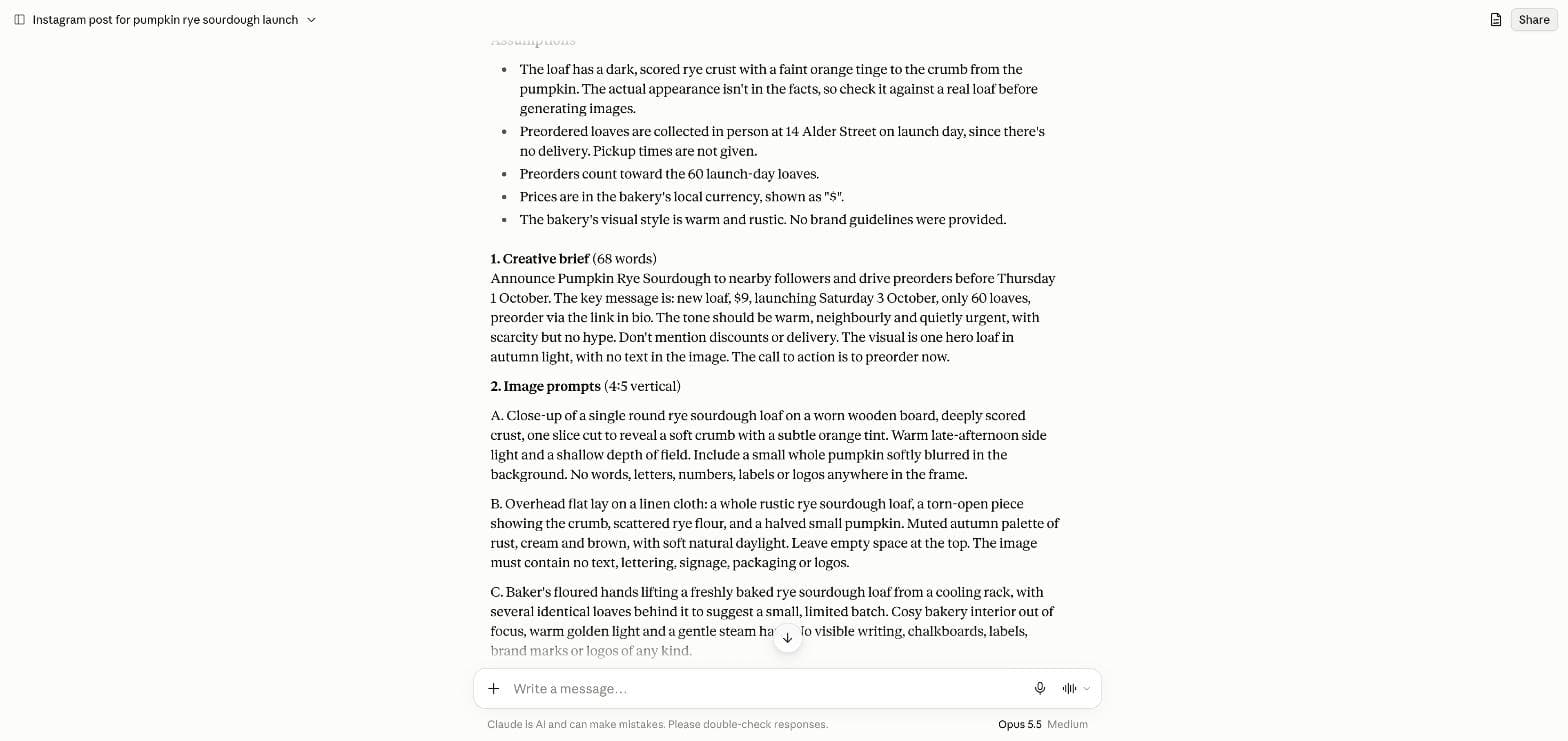
We asked Opus 5.5 to plan a launch post for a fictional bakery: a short brief, three image prompts and a caption. Its visible answer was about 2,500 characters, or roughly 630 output tokens, from a prompt of about 250 tokens.
At API rates that is about a cent and a half before thinking tokens, which we cannot see and which add to the output bill. On a claude.ai plan it simply counts toward your usage.
What a bulk job costs
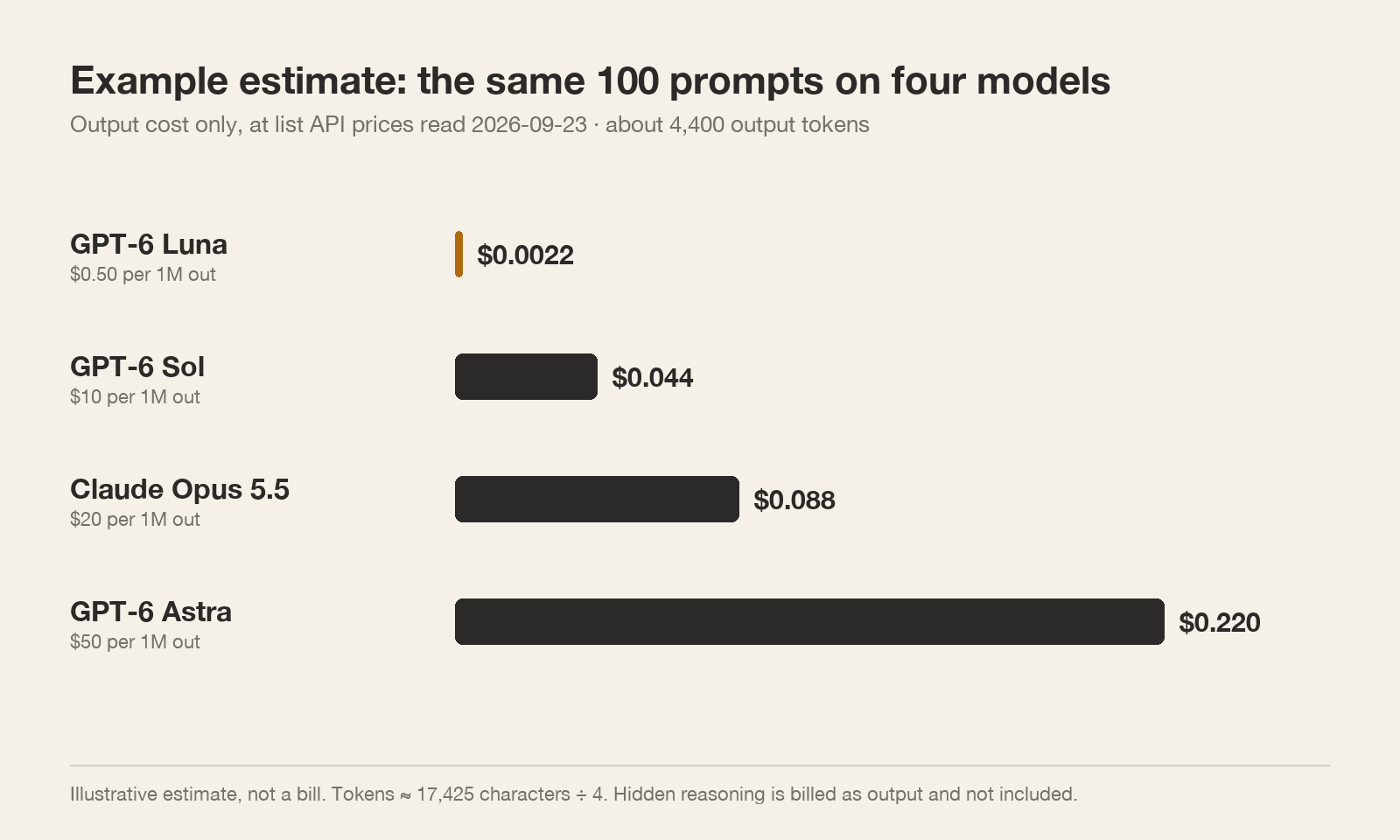
Larger jobs show the gap between models. A list of 100 image prompts from our Luna test came to about 4,400 output tokens. At list prices the visible text would cost about $0.088 on Opus 5.5, $0.044 on GPT-6 Sol, $0.0022 on GPT-6 Luna and $0.22 on GPT-6 Astra.
These are illustrative estimates from character counts, not bills, and they leave out thinking tokens.
Where the money really goes
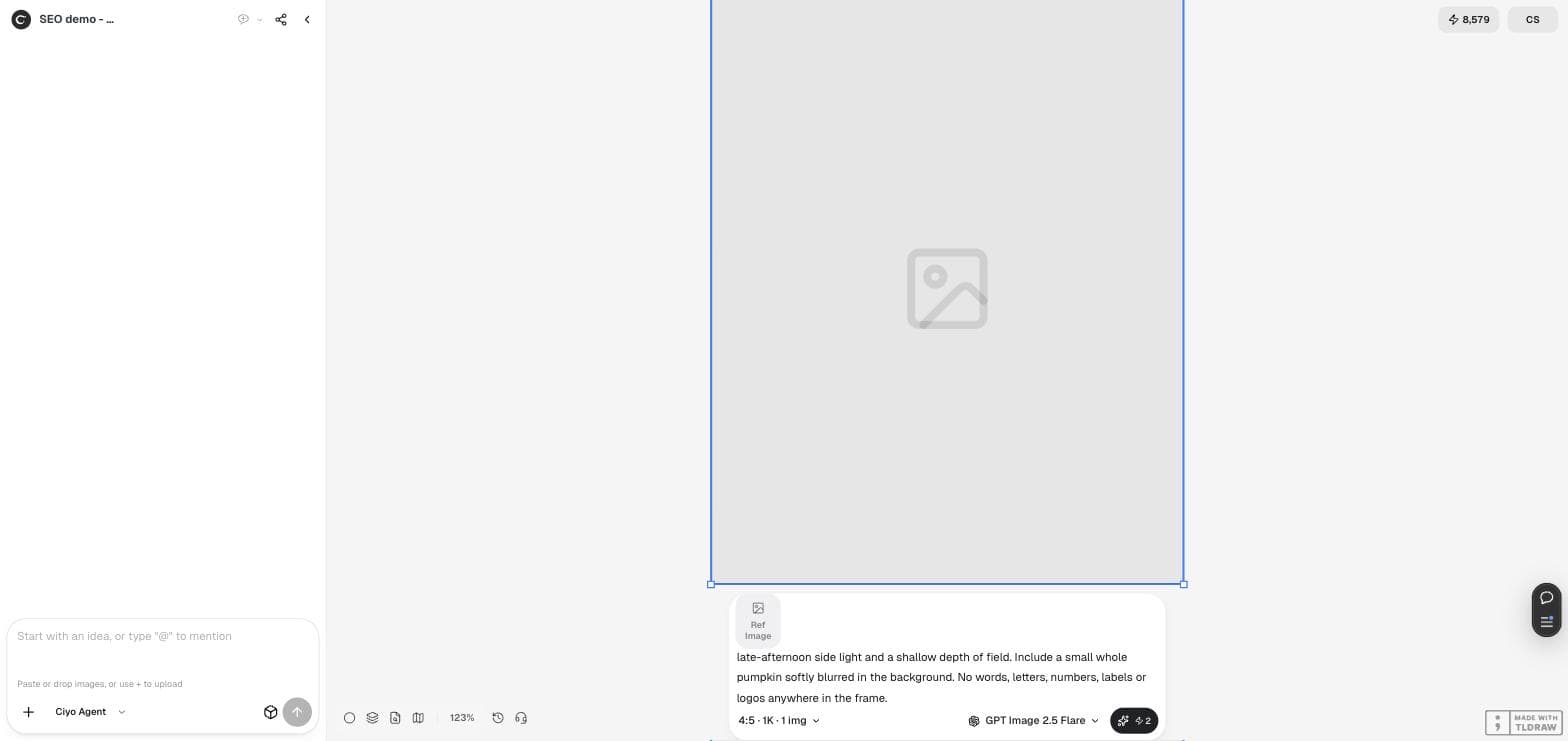
For a small business the planning text is the cheap part. The picture is where cost adds up. Opus 5.5 does not make photos; in our test it drew an SVG illustration instead. We made the photo in Ciyo with GPT Image 2.5 Flare at 4:5 and 1K for 2 credits.
Ciyo does not run Claude Opus 5.5. Its agent offers Ciyo Agent and GPT-6 Astra, and credits are charged per image, with the cost shown on the button before you run it.
Anthropic's note on limits
Anthropic's developer account paired the price news with a change to Claude Code limits on launch day.
Posted 2026-09-22 by Anthropic's Claude Devs account. It repeats that Opus 5.5 performs at Fable 5.1's level, about 30% faster and 40% cheaper than Opus 5 per task, and says Claude Code's five-hour session limits went up 20% that day. It is the vendor's own summary.
Opus 5.5 pricing questions
How much does Claude Opus 5.5 cost?
$4 per million input tokens and $20 per million output tokens; fast mode is $8 and $40. Cache reads cost $0.20 per million.
Which Claude plans include Opus 5.5?
Pro, Max, Team and Enterprise in claude.ai, according to Anthropic's announcement.
What is the Opus 5.5 limit reset?
A one-time offer we saw in claude.ai on September 23: extra room to explore through a usage limit reset, expiring October 22.
Can I switch thinking off to save money?
No. Anthropic says Opus 5.5 is no longer available with thinking switched off, and thinking is billed as output.
Pay for the pictures you keep
Plan anywhere, then generate in Ciyo, where each image shows its credit cost before you run it.