Industrial design review · Production guide
Storyboard a prototype use scenario before the handling test
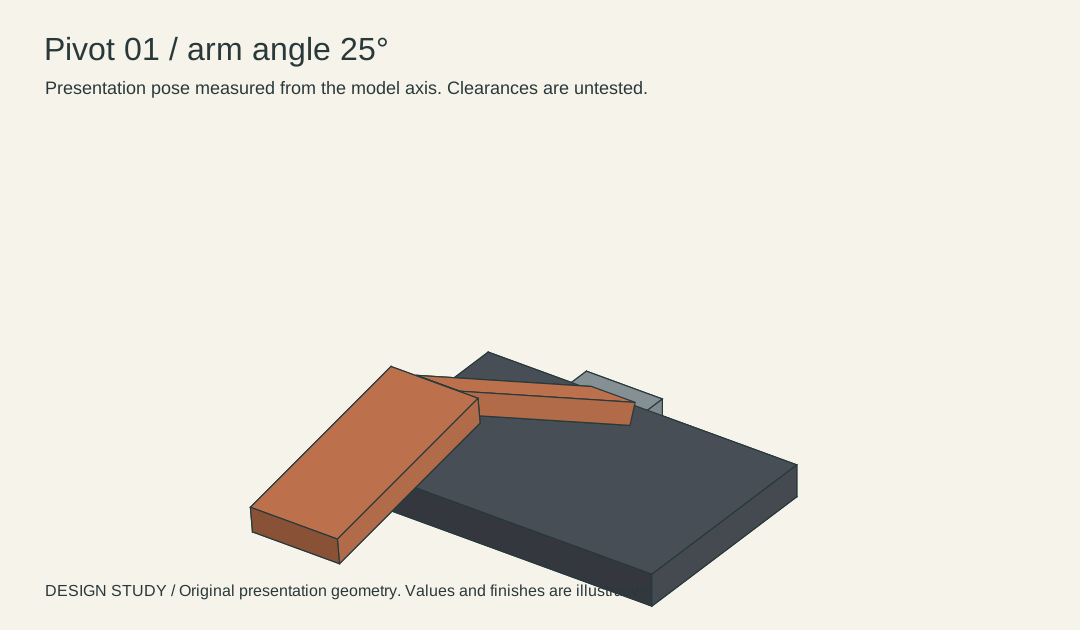
Storyboard three actions: lift the folded lamp by its base, place it on a desk, then open the arm. The supplied poses explain motion only; a real grip requires prototype photographs.
Input and decision
Write the sequence as a short observation: pick up, place, open, adjust. For every beat, note what is known from the prototype and what needs a physical test. Pivot 01 is an original presentation model. Material and mechanical approval require their own evidence.
Set up the comparison
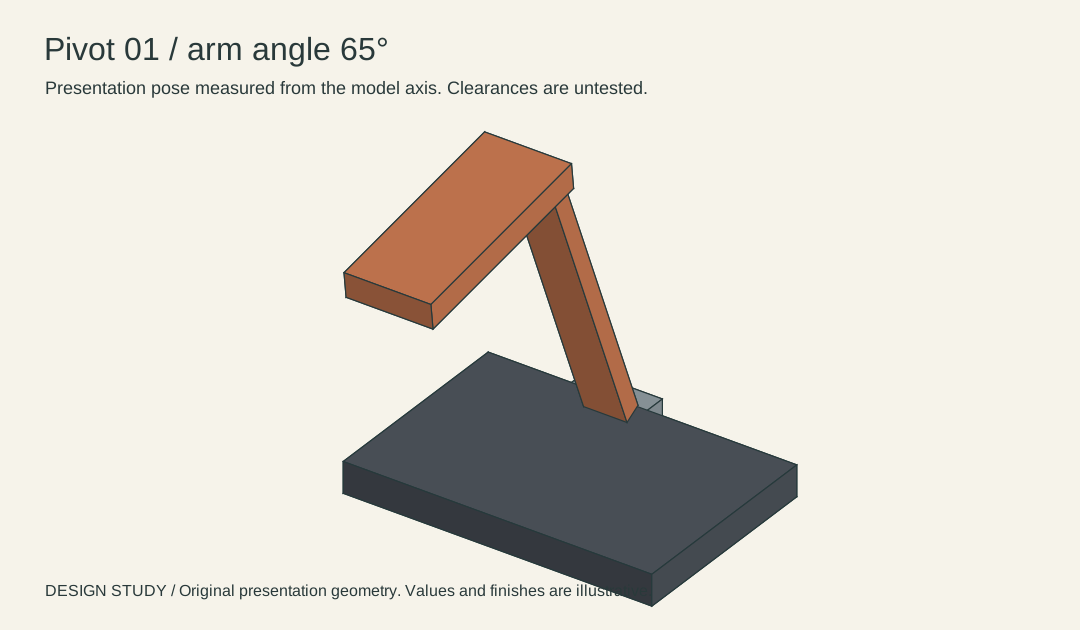
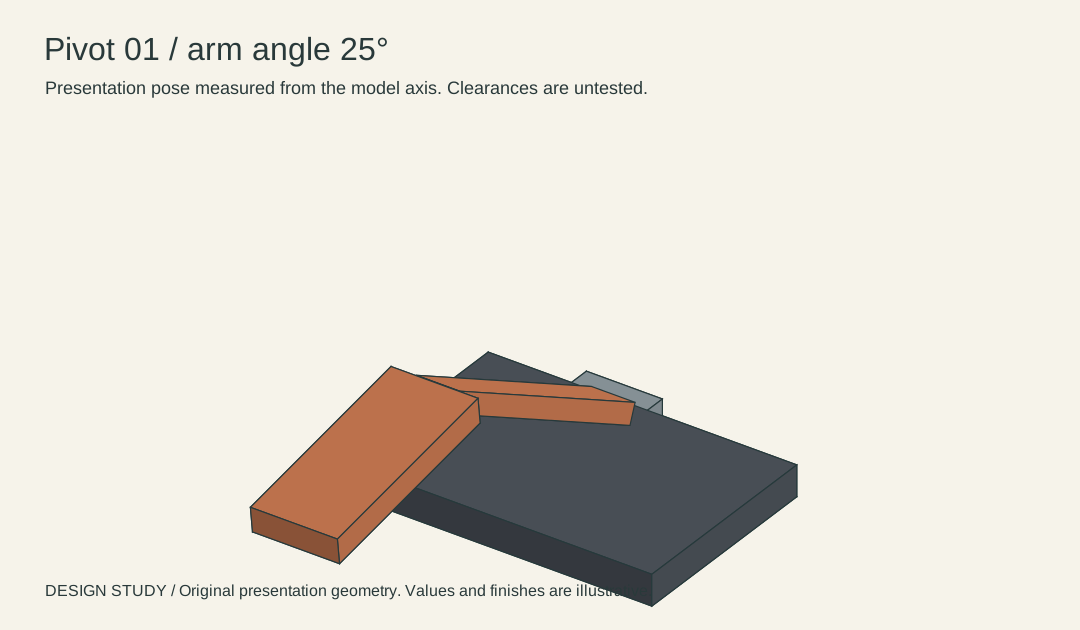
Use the supplied three poses to communicate intended opening travel. Do not infer grip comfort or safe finger clearance from these visual angles.
Make the comparison
Ask someone to lift and set down the prototype while a second person records where the hand contacts it. Compare that observation with the model pose.
Worked record
The downloadable worksheet includes the records below and a blank row for your own project.
| Beat | Observed action | Model pose | Missing evidence | Test owner |
|---|---|---|---|---|
| Lift | Not observed | Low pose | Actual grip | Researcher |
| Place | Not observed | Base down | Desk contact | Prototype owner |
| Open | Design intent only | 25 to 65 degrees | Finger clearance | Mechanical engineer |
Check the result
Separate observed user behaviour from an imagined pose. A reviewer should be able to trace each factual claim to supplied footage or a test record.
Hand off the revision
Keep the proposed holding pose and the observed prototype take as separate attachments to the same test row.
Review question
Which handling claims require a prototype observation?
Ask the prototype owner to record the grip and desk contact. Finger clearance at the hinge needs a separate mechanical check.
Use the task on your own brief
Use a copy of the worksheet to keep the project’s source files, reviewed options and decisions together.