Interior concept review · Production guide
Present daytime and evening lighting concepts for a restaurant
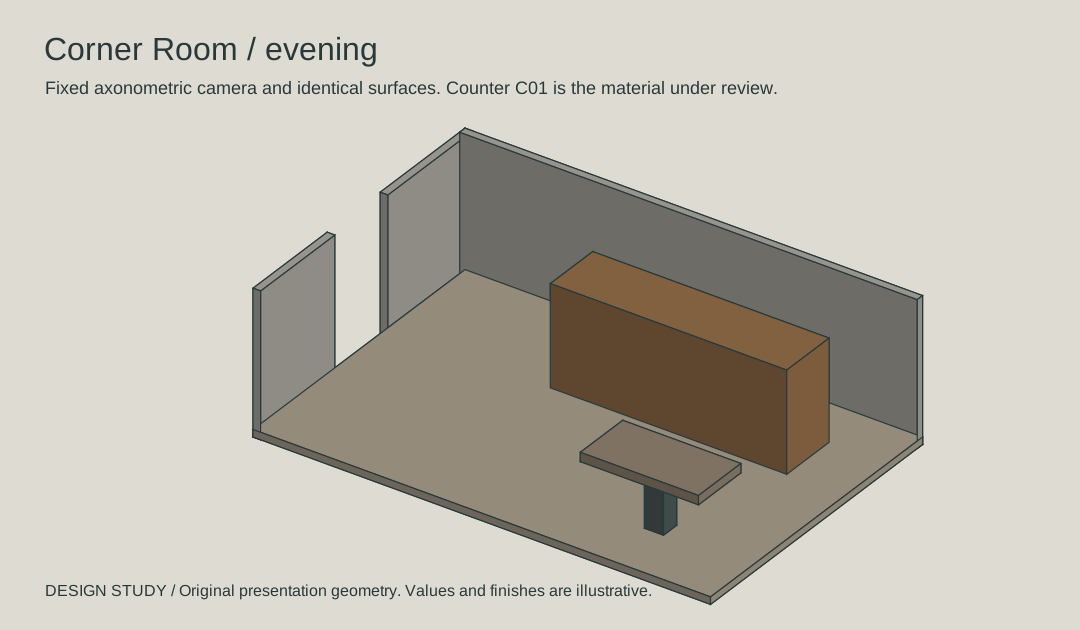
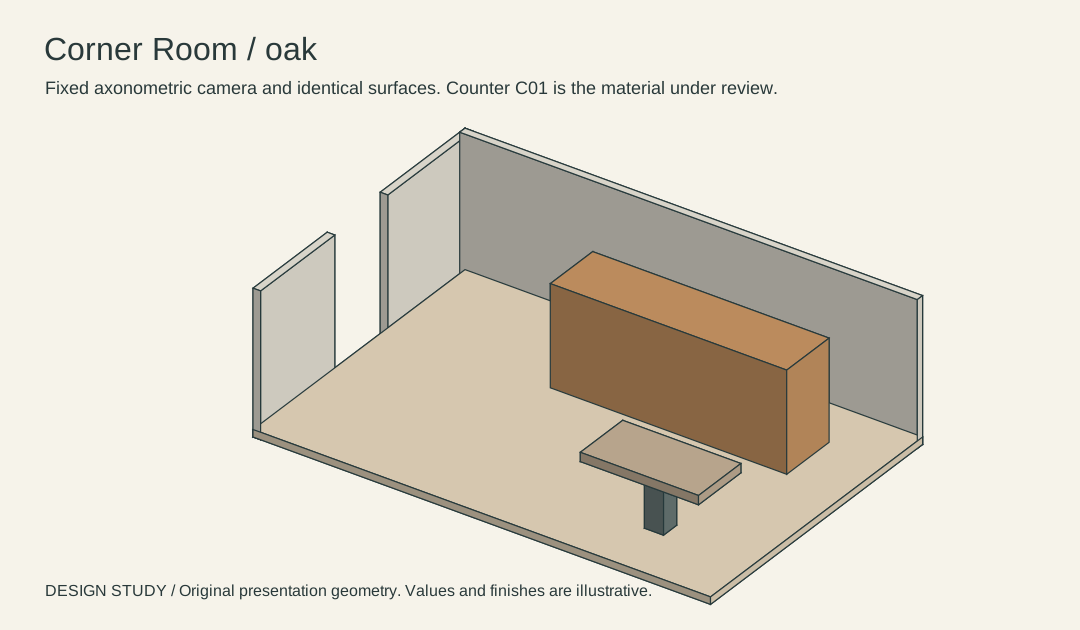
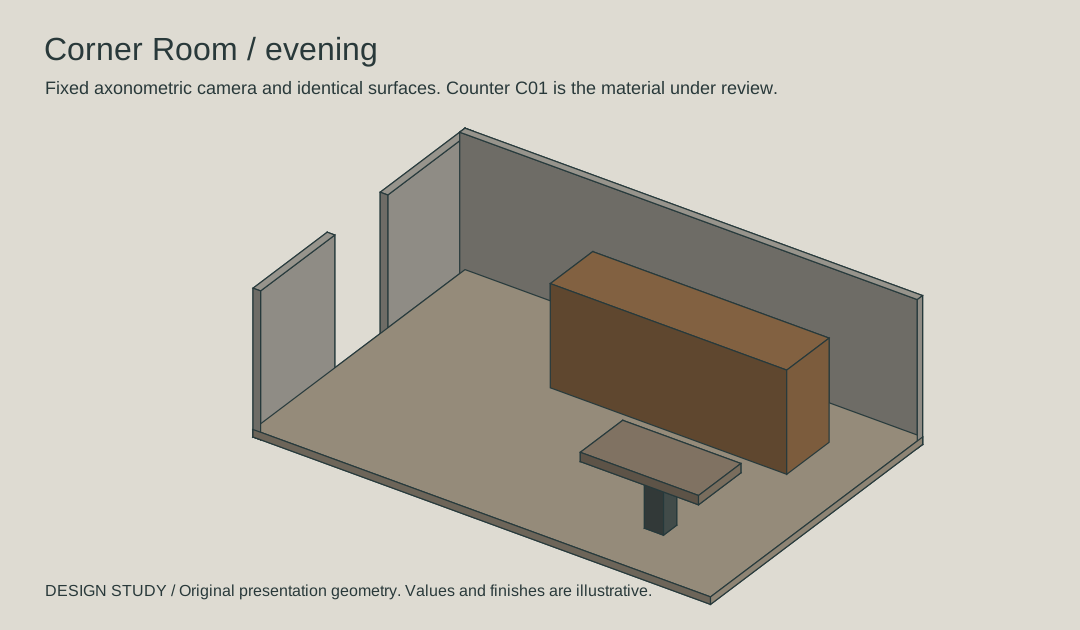
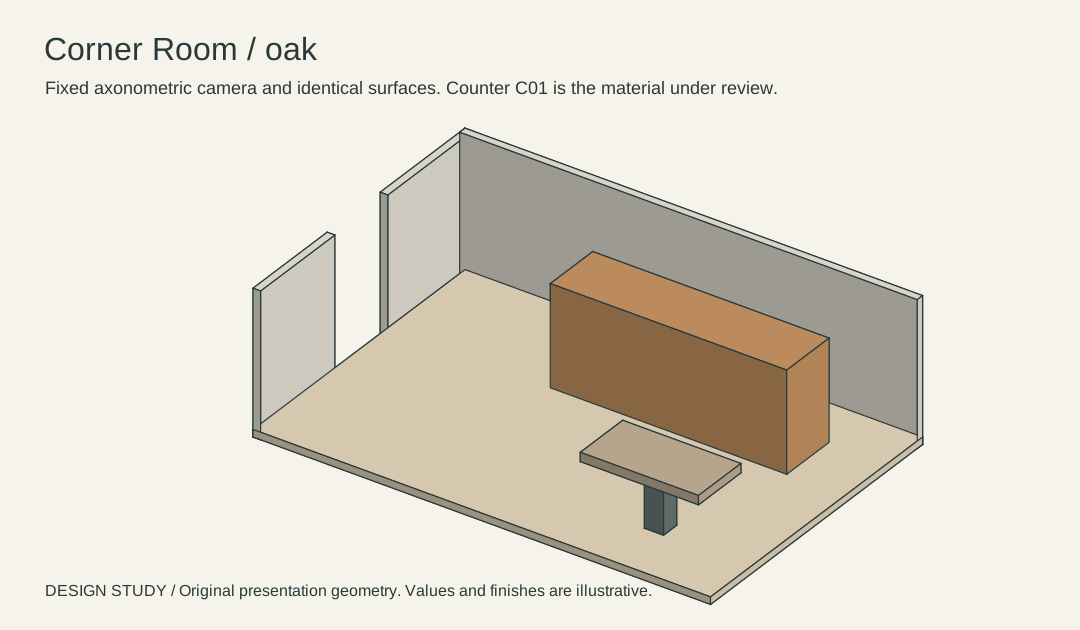
Compare the oak daytime view with the evening illustration. The drawn evening treatment darkens the same surfaces, providing a discussion aid for contrast and emphasis.
Input and decision
Start with a daytime view and list the surfaces the owner needs to recognize after dark. In the illustration only the shading treatment changes. Corner Room is a fictional original model. Its geometry is a discussion reference for this exercise.
Set up the comparison
Review the menu and service counter at the intended viewing scale. If the question is minimum illumination, send it to the lighting professional with the actual fixtures and model.
Make the comparison
Have the client mark the evening surface they can no longer identify. Pass that position to the lighting designer with the original daytime view.
Worked record
The downloadable worksheet includes the records below and a blank row for your own project.
| Scene | Appearance goal | Reference | Open measurement | Owner |
|---|---|---|---|---|
| Day | Read counter material | C01 and T01 | No lighting calculation | Lighting designer |
| Evening | Discuss contrast | Same geometry | No measured lux | Lighting designer |
| Final fixture selection | Pending | Actual lighting model | Specification required | Engineer |
Check the result
Do not use illustrative shading as measured illuminance. The lighting designer supplies fixture specifications and measured or simulated lux values.
Hand off the revision
Send the preferred mood reference to lighting with the relevant surface IDs and the outstanding measurement request.
Review question
Does selecting the evening mood approve lighting performance?
The day and evening illustrations share surface IDs. Record the atmosphere decision separately from lighting calculations and measured illuminance.
Use the task on your own brief
Use a copy of the worksheet to keep the project’s source files, reviewed options and decisions together.