One-sheet zine layout
One-Page Zine Template: Check Panel Order Before Printing
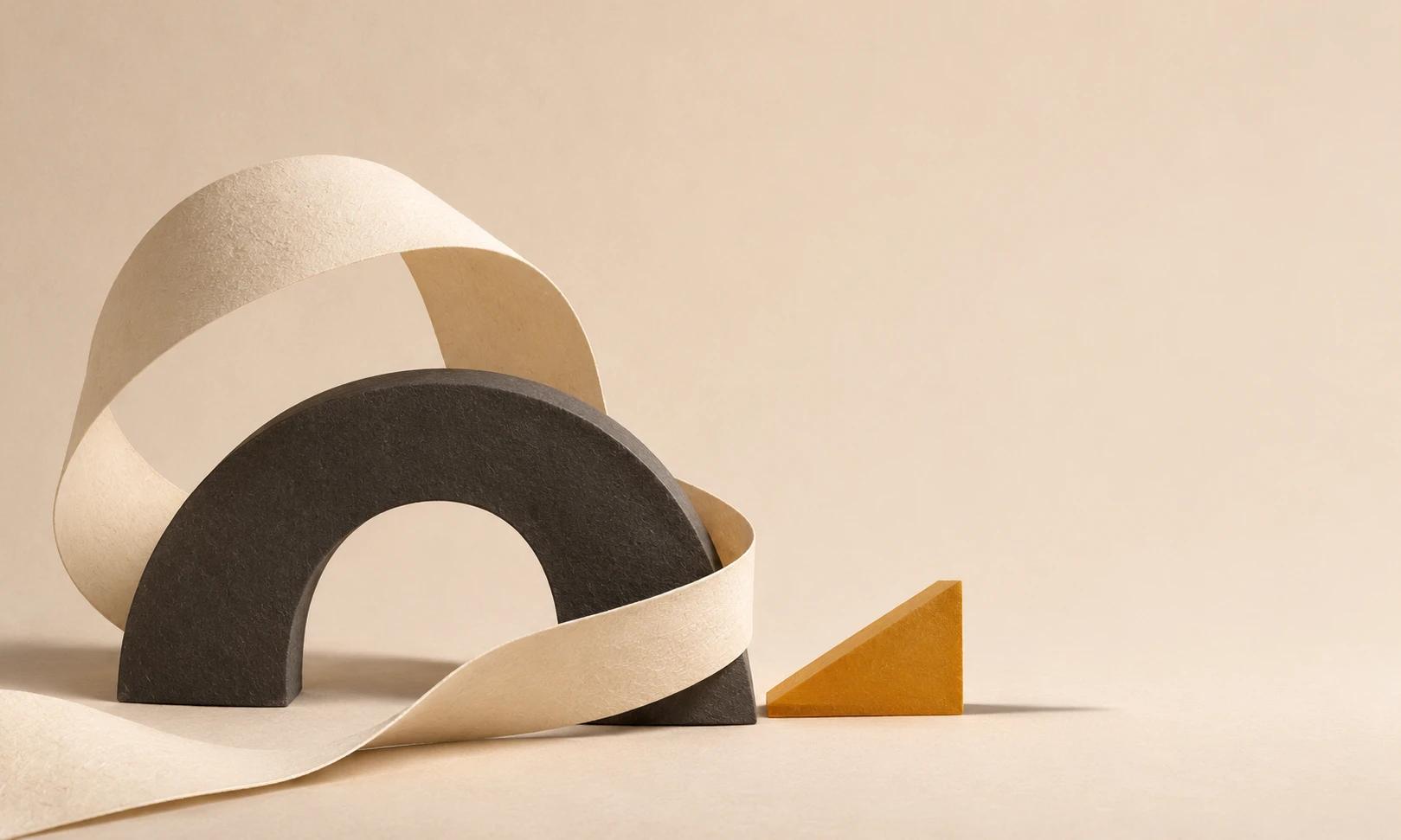
A one-sheet zine can look correct while lying flat and put a page upside down when folded. Designing all eight panels in reading order across a sheet is not the same as arranging them for a folded booklet. Make the page-order check visible before investing in finished lettering and art.
We generated original abstract cover artwork in a Ciyo development workspace on November 21, 2026, then assembled a separate A4 landscape HTML proof with eight numbered panels. We checked its digital layout against a library folding reference. We have not printed or physically folded it; that remains an essential step for your own printer and paper.
Quick answer: print the numbered proof before the finished art
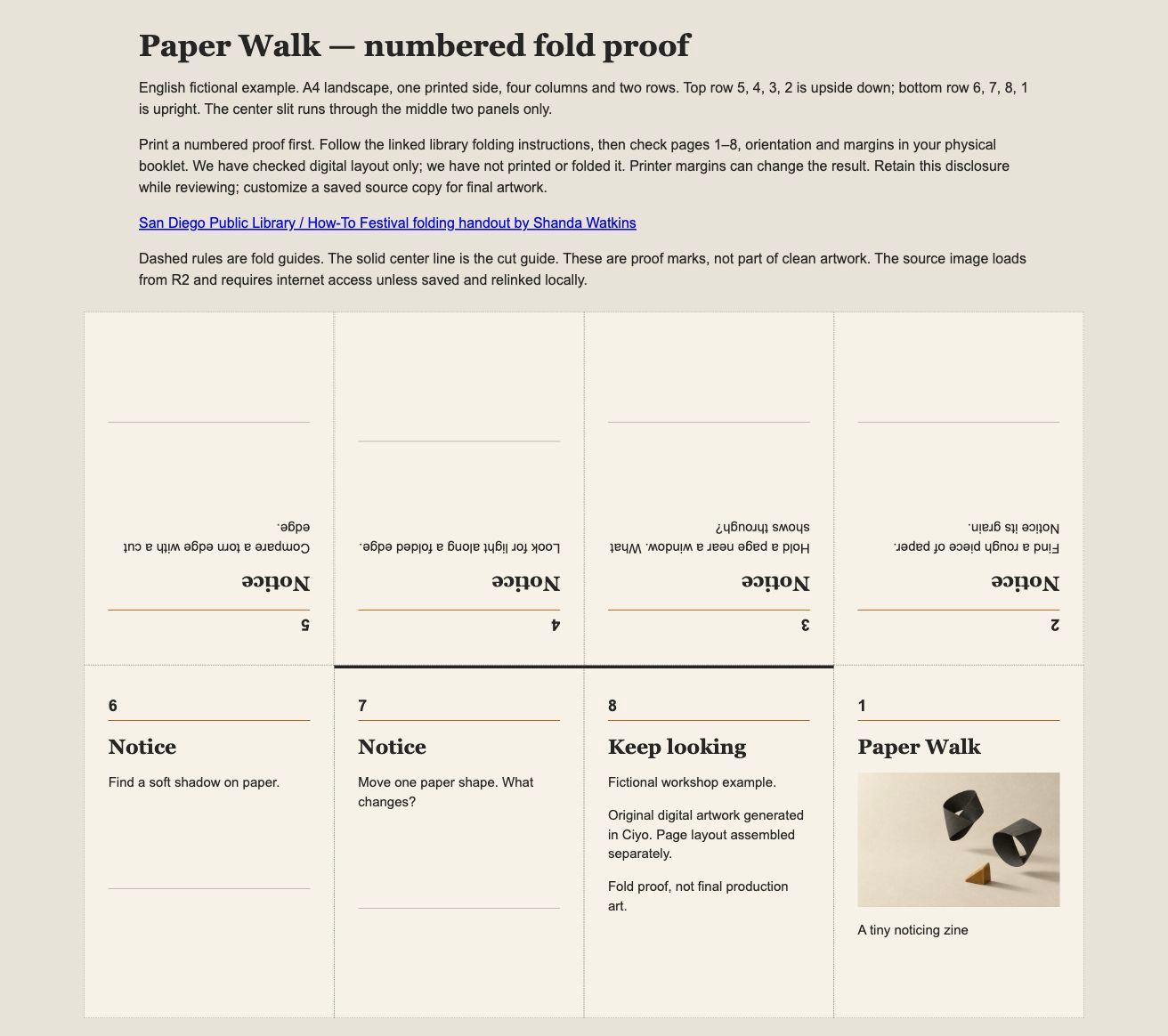
Use one sheet divided into four columns and two rows. In this layout, the top row is 5, 4, 3, 2 with content rotated 180 degrees; the bottom row is 6, 7, 8, 1 upright. The center slit crosses the middle two panels. The front and back count among the eight pages.
Follow five steps: make a numbered paper plan, prepare compact content, create artwork, assemble the imposed sheet, and fold a physical proof. The supplied English HTML is a teaching proof with guides and sample content, not a claim that your printer or final booklet has been tested.
| Sheet row | Page order | Orientation |
|---|---|---|
| Top | 5 · 4 · 3 · 2 | Rotate each panel 180 degrees |
| Bottom | 6 · 7 · 8 · 1 | Upright |
| Center crease | Slit through middle two panels only | Keep outer sections intact |
1. Understand the fold before placing artwork
Start with an inexpensive numbered sheet. The San Diego How-To Festival handout by Shanda Watkins provides an eight-page folding diagram; we inspected its second-page template to verify the arrangement used here. State Library Victoria also explains how a single sheet becomes an eight-page zine.
For this example, the finished page area comes from dividing A4 landscape, 297 × 210 mm, into eight panels. Each panel is 74.25 × 105 mm before practical printer and fold effects. Those dimensions are layout arithmetic, not a guarantee about the usable area of every printer.
Keep this one-sheet structure separate from a multi-sheet booklet or an event program. A different binding method needs its own page arrangement; a layout intended for a folded four-page program is not automatically suitable here.
2. Give the eight pages small, distinct jobs
Our fictional Paper Walk zine is a short noticing exercise. Page one is the cover, pages two through seven offer six paper-and-light prompts, and page eight provides the fictional-example context and artwork credit. That gives the reader a clear beginning and end without crowding each tiny page.
Write for the physical panel, not the width of your monitor. A sentence and room to draw can be more useful than a paragraph that becomes too small to read. Preserve page numbers during the proof stage so a missing or repeated panel is obvious.
Keep a reading-order list from 1 through 8 in your notes. The imposed sheet rearranges those pages for folding; it should not become your only record of the intended sequence.
3. Create abstract art separately from exact page geometry
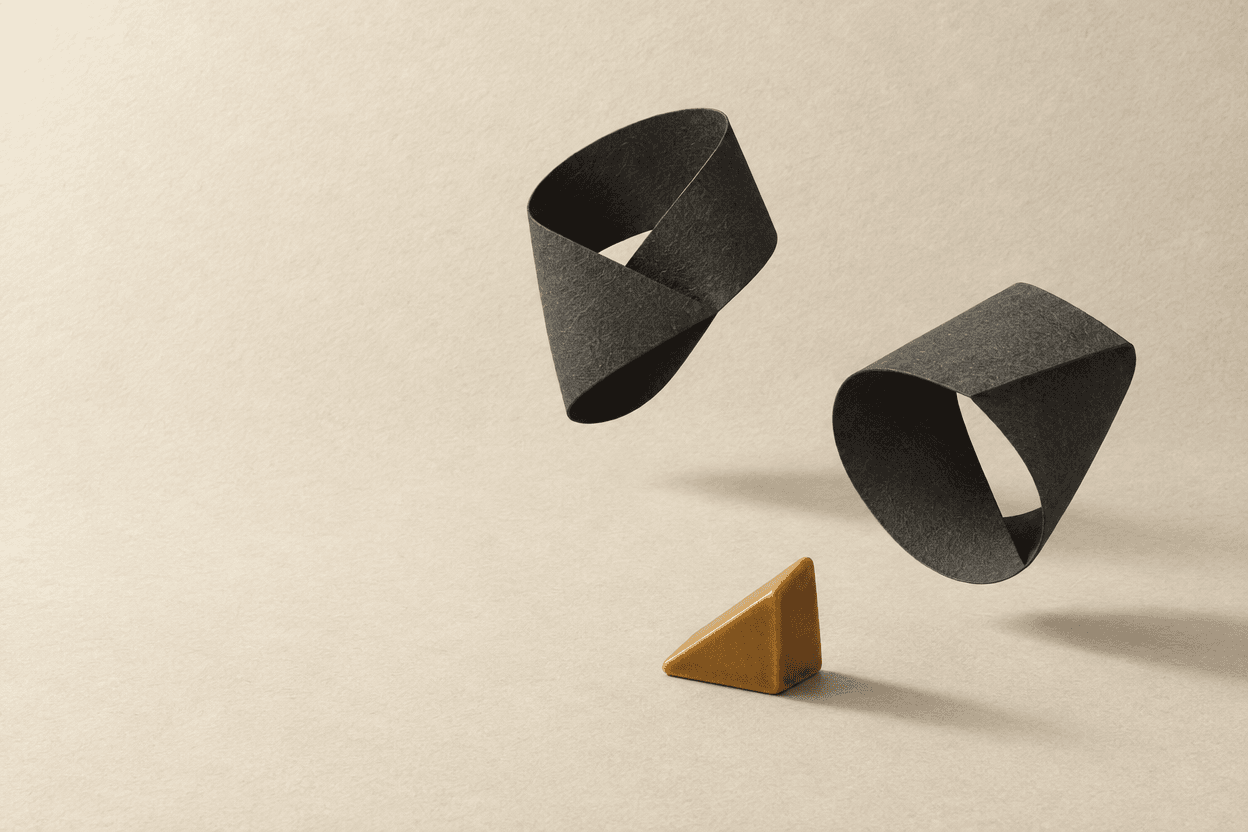
We asked Ciyo for text-free artwork, leaving page numbers, panel positions and fold marks to the document layout. The selected result uses two charcoal folded loops and a small amber wedge over a quiet ivory surface. The actual downloaded PNG is 1248 × 832 pixels.
Ciyo supplied the artwork through its generated-file preview and download. It did not produce the imposed HTML sheet. The final abstract option replaced an earlier image whose landscape-like composition did not meet our art direction; the linked example uses the reviewed replacement.
Keep the source image intact when placing it. Our front panel contains the complete landscape artwork at a smaller size rather than stretching it into a portrait panel. A different crop should be a deliberate visual decision and reviewed again.
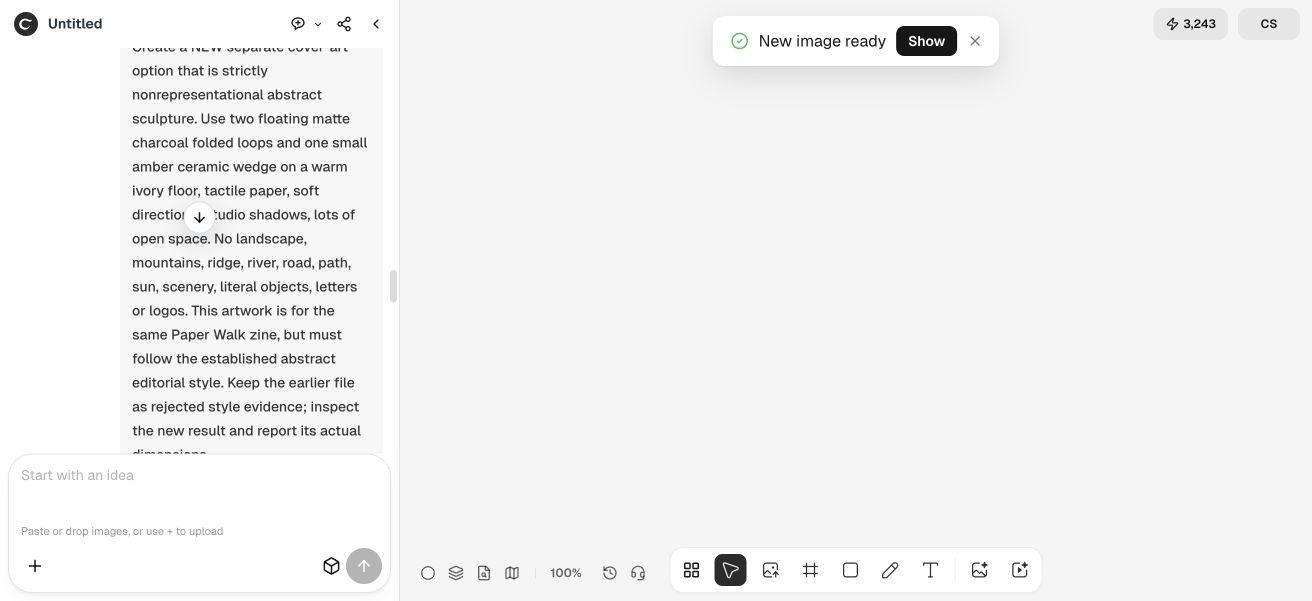
Create one original strictly nonrepresentational abstract artwork for [zine project]. Use [specific sculptural forms] in warm ivory, charcoal and a restrained amber accent, with tactile matte surfaces, soft directional shadows and generous open space. No scenery, people, letters, numbers, logos, panel grid or fold marks. Save the image and report actual dimensions. This is artwork only; do not claim a correctly imposed or physically folded booklet.4. Assemble the numbered imposed sheet
The linked HTML proof was assembled separately for this article. It places pages in the verified arrangement and rotates each top-row panel. A solid center line marks the middle-half slit; dashed panel edges mark the proof's fold guides. These marks are intentionally visible for checking.
Keep content away from panel edges and fold lines. In our sample, the artwork stays within the front panel and the six interior prompts have their own writing space. The panel numbers remain prominent so you can compare the flat sheet with the reading-order list.
The source loads the actual Ciyo artwork from public R2. Save and relink the image if you need an offline copy. Editing the HTML or exporting it through another tool produces a new version that needs a fresh page-order and layout review.
5. Fold and read an actual proof from your printer
Print the numbered sheet on one side using the intended paper and scale. Follow the library's folding diagram: crease the sheet into eight panels, make the center slit through the middle section, then collapse the folds into the booklet. Use the reference illustrations when the three-dimensional folding step is unclear.
Read the booklet from front to back. Check that pages 1 through 8 appear once, in order and upright, and that text remains clear of folds and any unprintable margin. If something is wrong, return to the source before removing proof marks or producing more copies.
We have checked digital arrangement and artwork, not a physical fold. Printer scaling, margins and paper behavior can change the result. Keep the numbered proof until your own folded copy establishes the intended reading sequence.
Choose a simple first version for the workshop
For a first session, use a cover and a few short prompts with room for handwriting. For a more finished edition, approve the page sequence before refining typography, then repeat the physical proof after replacing content. A series should keep a clear version and source file for each issue.
Do not treat a preview screenshot as print validation. The useful deliverable here is an editable, inspectable starting point that makes the next physical check straightforward.
One-sheet zine questions
Does eight pages include the covers?
Yes. In this example, page 1 is the front cover and page 8 is the back. Six interior pages complete the eight-page booklet.
Why is the top row upside down on the flat sheet?
The imposed layout anticipates the folds. For this specific arrangement, top-row pages 5, 4, 3 and 2 are rotated 180 degrees so they can read upright in the intended booklet.
Did Ciyo create the full printable sheet?
No. Ciyo created the selected abstract image. The numbered HTML proof, content placement and guides were assembled separately for this article.
Has the downloadable proof been physically folded?
No. Its digital arrangement was checked against the library reference. Print and fold your own numbered proof before making a finished version or multiple copies.
Make the artwork and the fold check separate steps
Use Ciyo to explore an abstract cover, preserve the source image and place it in a numbered sheet. Confirm the sequence in a physical proof before final printing.