Paper patterns
Turn a rangoli flower into a border that meets at the corner
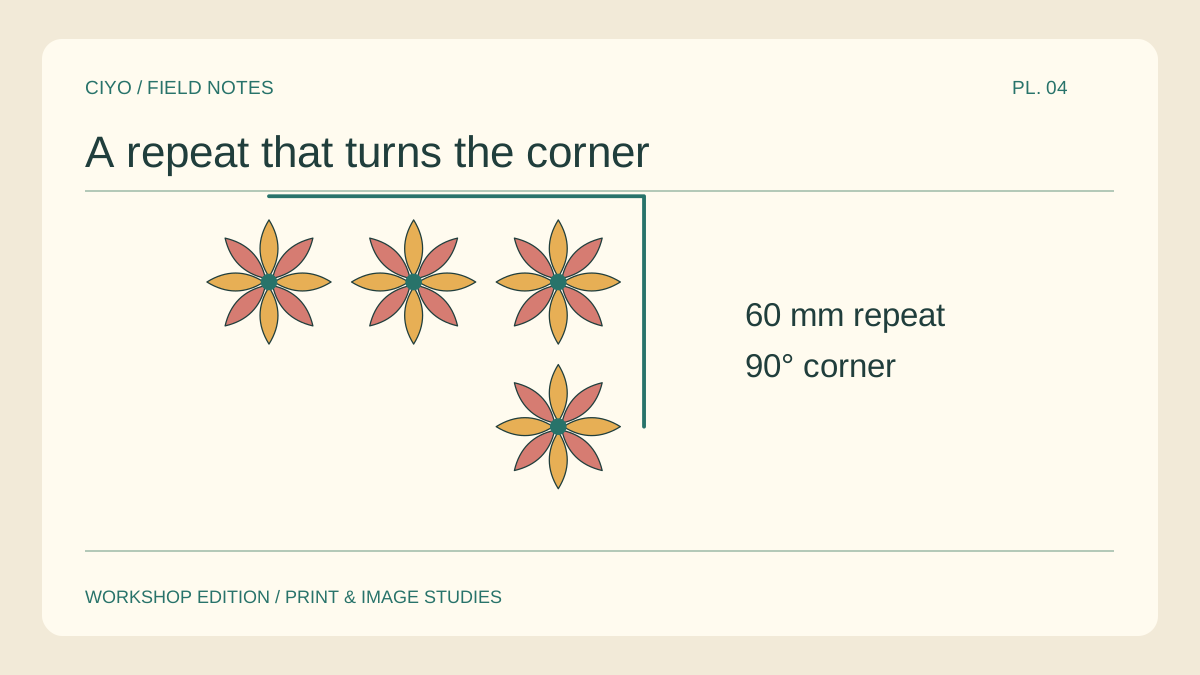
A row of evenly spaced flowers can end with two tips colliding at a doorway corner. Solve the corner on a scrap first. A quarter-turn mark and two short trial strips let you test the joint before drawing the whole border.
Reserve the turn
Draw a square at the corner as wide as the border. Put the centre of a flower at its centre and leave this tile intact. The first horizontal and vertical repeats will both be measured from that same point.
Choose the repeat distance
On a straight strip, mark three flower centres. Try a 60 mm interval for a small paper example. Measure centre to centre so the spacing does not change if you later make the tips more pointed.
Build a half-flower edge
Trace one half of a flower at the end of the horizontal strip. Mark which way its fullest petal faces. Rotate a copy of the strip 90 degrees and compare how the two end motifs meet the corner tile.
Count full intervals
Measure the straight distance after the corner tile and divide by the chosen interval. If five intervals fit with a short remainder, distribute that extra space across the gaps or plan a clear end cap. Avoid a lone partial flower at eye level.
Dry fit both directions
Lay the two strips on an L-shaped pencil mark. Look directly down at the inside corner. Where petals visually merge, remove one accent from the corner tile or choose a smaller central flower while keeping the spacing on both straight runs.
Make a registration mark
Keep a tiny centre dot and one outward-facing tick on the master template. When moving it along the border, align the dot first and use the tick to maintain orientation. Save a clean version of the corner for repairs.
Try a second border motif
Export a flower with the same petal count and use it to check the repeat on your corner mockup.