Wholesale workflow
Wholesale Line Sheet Template for a Small Product Collection
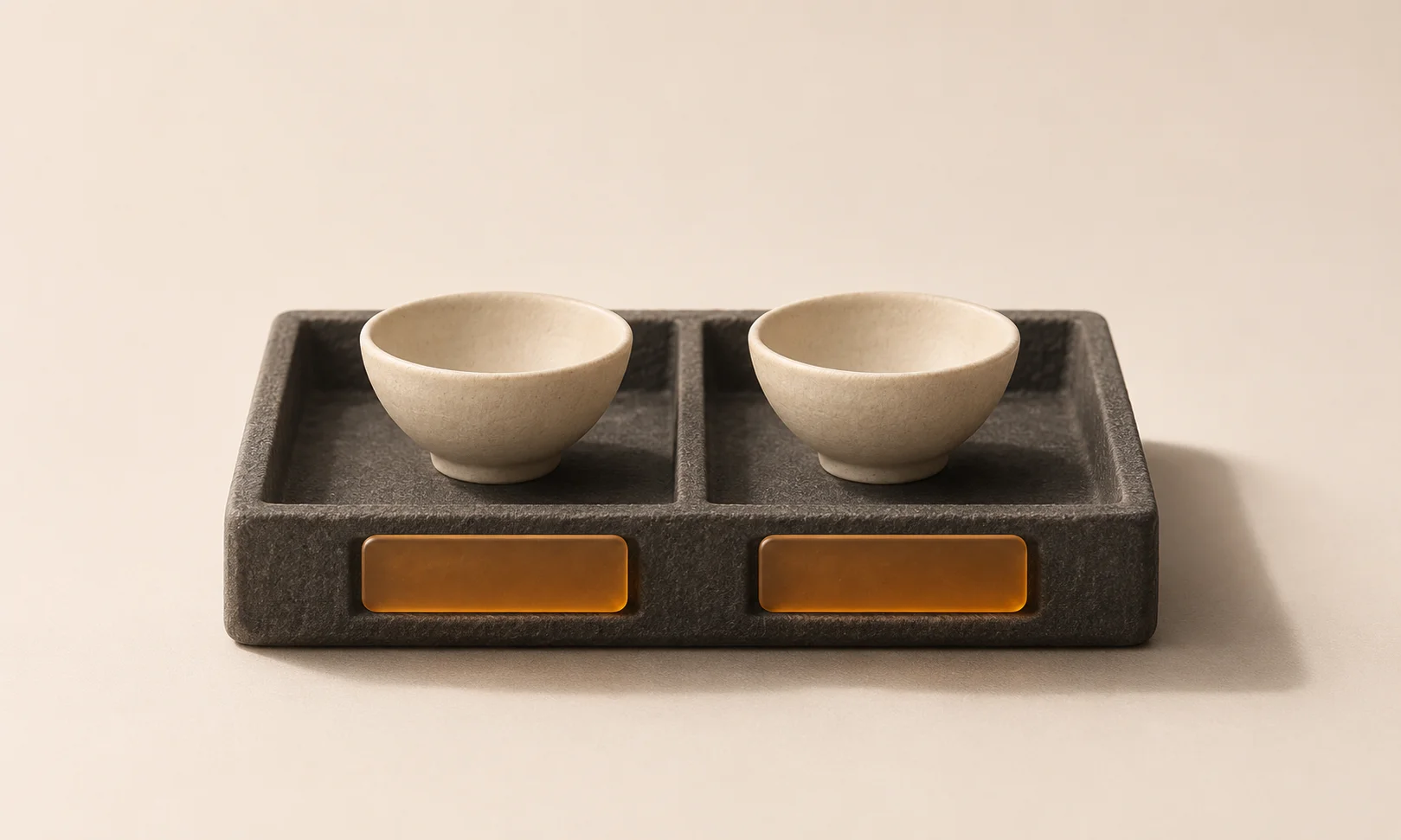
A retailer can like a product photograph and still be unable to place an order from the sheet. We used a published wholesale checklist and a fictional ceramics collection to build a layout around the buyer's decisions. The example amounts and order terms are illustrative.
The quick workflow
Verified product list → matching thumbnails → one orderable row per SKU → buyer proof → dated handoff. Put shared terms at the bottom and repeat only fields that vary by item.
Gather order facts before laying out
Start with approved SKU, variant name, wholesale unit price, units per case, lead time and buyer contact. Verify the currency, order minimum and payment terms with the seller. Leave pending details in the working draft until the owner has supplied them.
Reuse this two-item layout
Add brand, collection, effective date and buyer contact at the top. Each row gets one product photo, exact display name, SKU and an orderable unit. The fictional order below uses wholesale prices per item. Spell out that unit in the heading.
| Item | SKU | Wholesale USD per unit | Case pack | USD per case |
|---|---|---|---|---|
| Dune espresso cup | NPC-CUP-DUN | $8 | 6 | $48 |
| Dune saucer | NPC-SAU-DUN | $6 | 4 | $24 |
Match each photo to one orderable row
Put the original images and approved data side by side in Ciyo. Use consistent thumbnail framing so the buyer can compare the cup and saucer. Keep the identifiers and price as editable text during proofing. If two colors share a name but have different SKUs, use separate rows or a compact variant table.
Proof it as if you were the buyer
Ask a colleague to place a hypothetical order for two cup cases and one saucer case. They should identify 12 cups, 4 saucers and a $120 subtotal before shipping and other charges. If they order by units when you sell by cases, make the quantity label and price basis more explicit.
Hand off a dated snapshot
Include the effective date, ordering address, order minimum and lead-time wording after those terms are approved. Keep the data source separately from the buyer-facing proof. When prices or case packs change, verify the affected rows and update the effective date before sharing the new sheet.
Use the two-SKU example as a buyer test
Before sending the proof, ask a reader to find the cup SKU, order two cases and state the unit count and subtotal. In this illustrative collection that is NPC-CUP-DUN, 12 cups and $96. Adding one saucer case gives four saucers and a combined $120 subtotal, before shipping or other charges.
Keep a blank field for every unapproved commercial term. The template is a layout aid, not a source of prices or payment terms. Replace the fictional rows, verify the arithmetic, and have the seller approve the effective date before sharing a buyer-facing copy.
Frequently asked questions
Can I combine a catalog and line sheet?
Yes, if a buyer can still find the SKU, ordering quantity, price basis and terms quickly. For a large collection, a separate order sheet is often easier to scan.
Should I list a suggested retail price?
Include it when it helps the retailer and you have verified it. Keep it in a clearly labeled column separate from the wholesale price.
Build an orderable proof
Start with two products on Ciyo's canvas. Match each thumbnail to its order row and check a hypothetical order before expanding the sheet.