Practical design workflows
AI Movie Poster Generator: Make Key Art for an Original Short Film
A cinematic image can suggest the wrong genre or bury the title. A useful poster needs one clear story signal, readable lettering and credits that match the film’s actual approvals.
We opened a Ciyo project for the fictional short film Last Light and briefed two visual directions. This is a worked creative process, supported by a current practitioner discussion, rather than a ranking of generators we have not tested.
Quick answer: compare concepts, then lock the lettering
Brief one original film with a short premise and exact approved text. Compare two distinct key-art directions at thumbnail size. Choose the composition, then add or verify the title, tagline and credits in a source that supports precise corrections.
Keep the poster’s distribution version separate from the editable artwork. Do not add festival laurels, awards, cast names or studio logos that the production has not approved.
1. Write a film brief that contains a visual decision
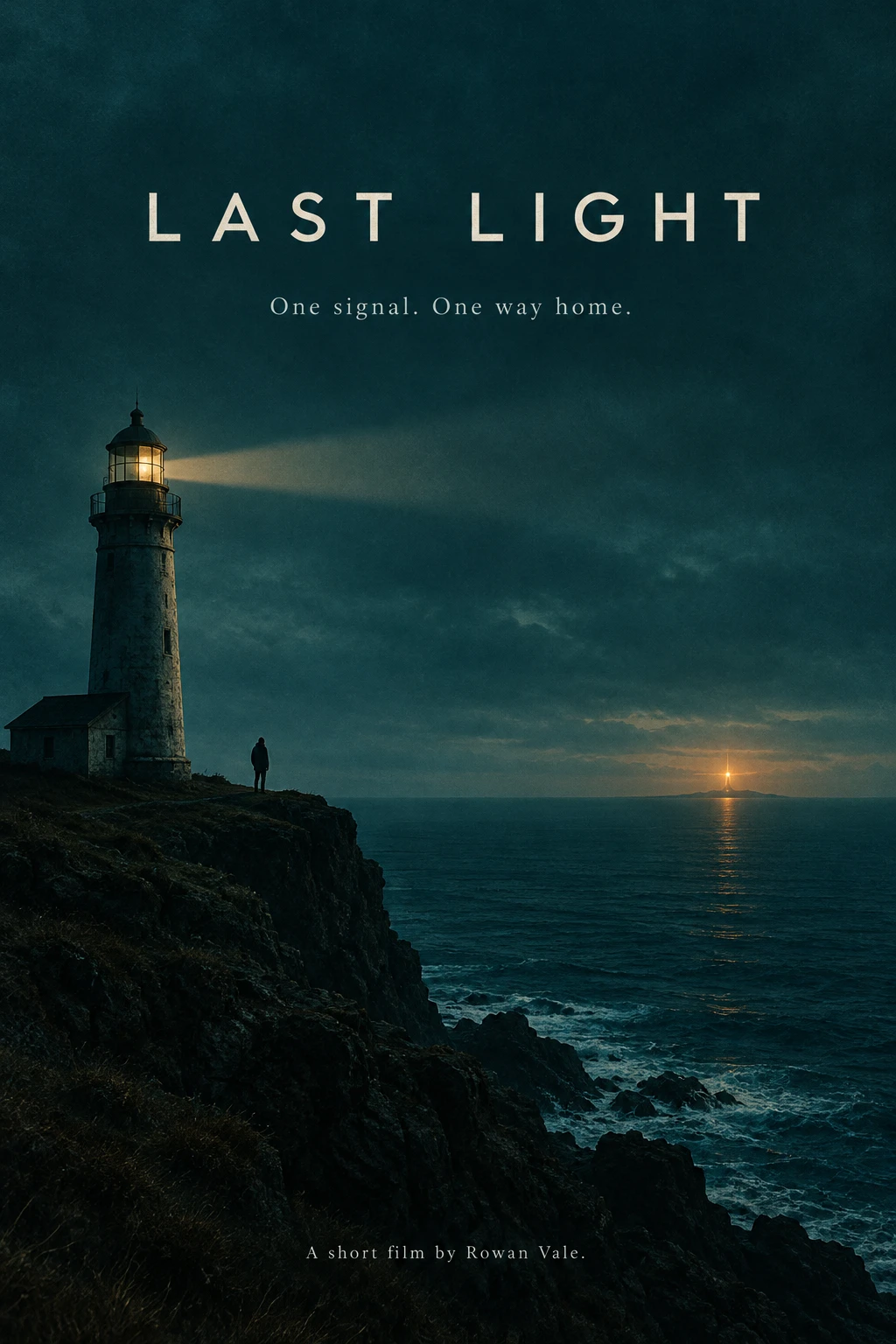
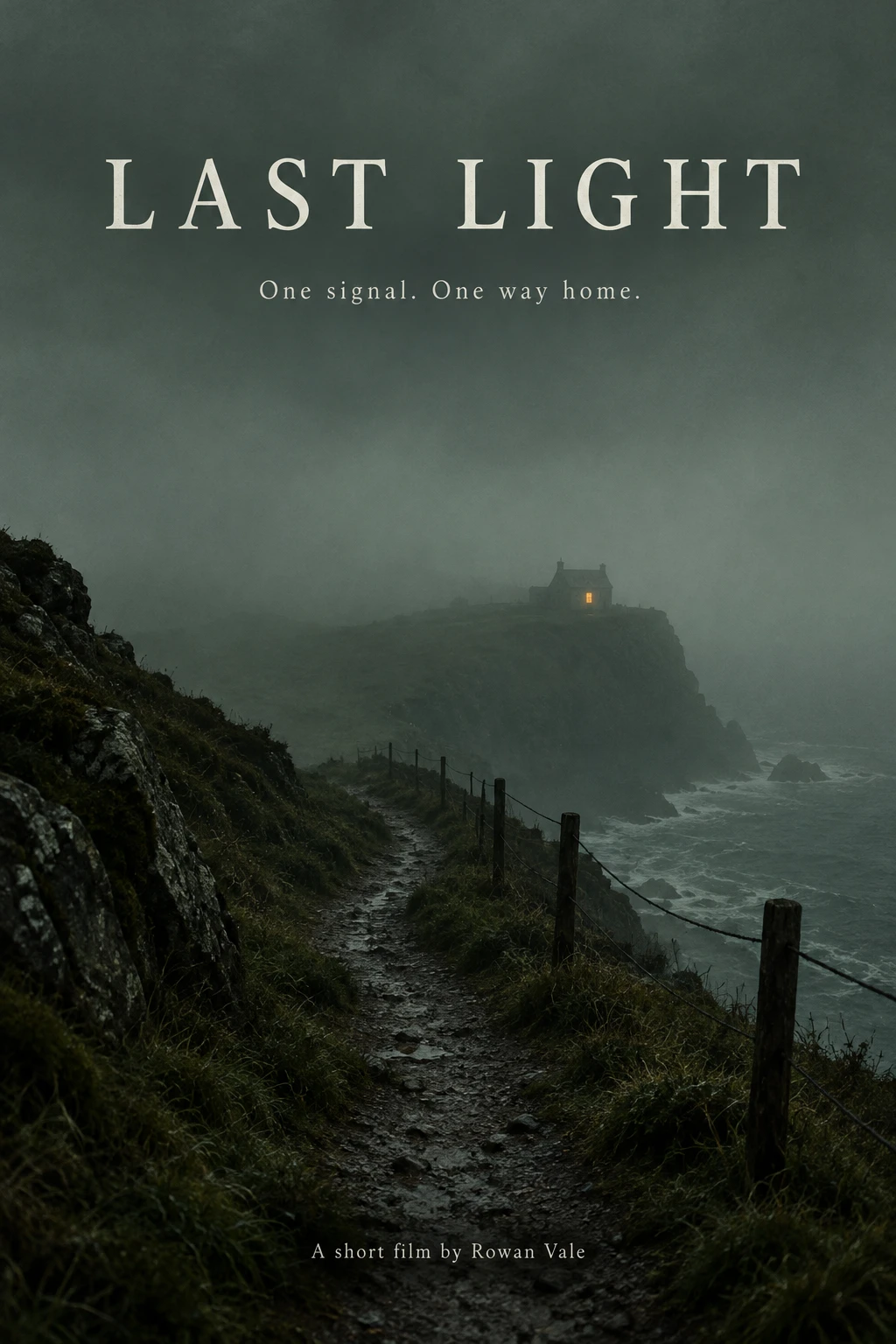
Last Light is a fictional coastal story with the sample tagline “One signal. One way home.” Its approved credit is “A short film by Rowan Vale.” Direction one uses a lighthouse and distant amber signal for quiet science fiction; direction two uses a foggy cliff path and one lit window for mystery.
Those alternatives change the promise to the viewer. If your film is a quiet drama, an explosive action composition may attract attention while misrepresenting the experience. Begin with the intended audience and genre before choosing a visual treatment.
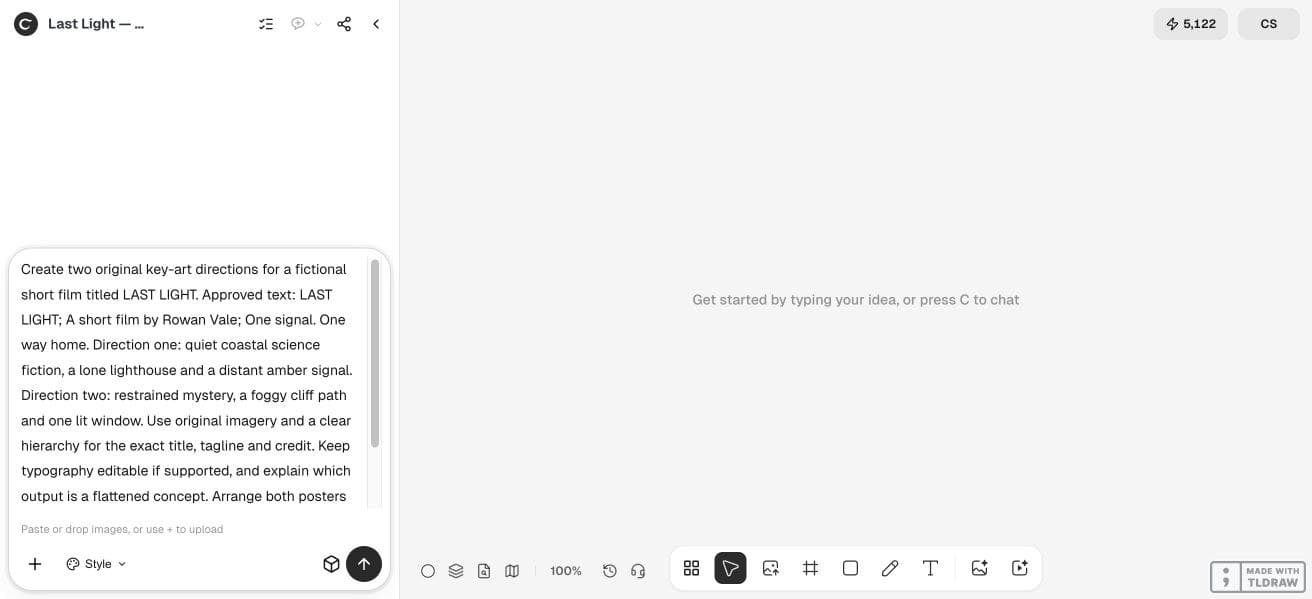
Create two original poster concepts for [film title], a [genre] short film about [one-sentence premise]. Direction A: [visual idea]. Direction B: [contrasting idea]. Preserve this exact title, tagline and approved credit: [text]. Reserve clear space for typography. No unapproved laurels, awards, cast, studio marks or release claims. Identify flattened text and any external finishing step.2. Generate compositions that leave room for the title
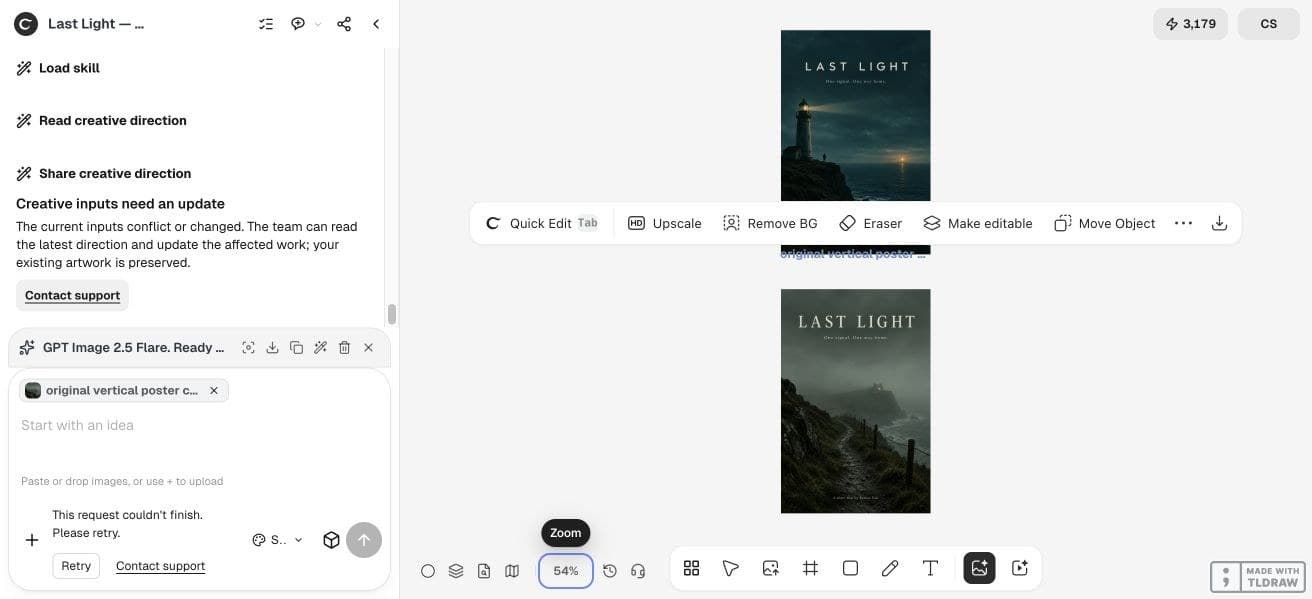
The Design agent workflow stopped before completing the two directions. We recovered the example with two separate direct GPT Image 2.5 Flare requests in Ciyo. Each produced a 1024 × 1536 flattened concept: the coastal science-fiction direction and the foggy-path mystery direction.
If exact typography is difficult to correct, generate the artwork without lettering and assemble the title separately. This adds a deliberate finishing step but lets you change a credit without redrawing the key art.
3. Choose the stronger promise at thumbnail size
Compare both directions as small cards. Ask what genre each suggests, where the eye lands and whether the title survives. An attractive image that becomes visually noisy when reduced may be a weak poster.
For our fictional brief, the lighthouse direction emphasizes isolation and a distant signal; the cliff-path direction emphasizes uncertainty and a route toward a small light. That is an editorial distinction, not a measured audience preference.
| Criterion | Coastal science fiction | Restrained mystery |
|---|---|---|
| Main signal | Lighthouse and distant amber light | Foggy path and lit window |
| Genre question | Does it feel quietly speculative? | Does it suggest uncertainty without generic horror clutter? |
| Title check | Keep a calm readable title region | Keep the path from competing with the title |
| Approval basis | Fit to the actual film | Fit to the actual film |
4. Proof the title, tagline and credit as literal copy
Read LAST LIGHT character by character. Check “One signal. One way home.” and the Rowan Vale credit against the approved text. Then check the saved export independently, including punctuation and any small billing copy.
A title can look plausible while losing a letter or gaining an invented production line. Remove unsupported credits instead of treating them as harmless decoration. Use your production’s approved legal and credit materials where required; this example is not a billing-block specification.
5. Inspect the file for its actual destination
A social announcement, festival submission image and printed one-sheet may need different dimensions or file types. Request those requirements from the destination before export. View the smallest lettering at actual output size and check safe margins.
A large on-canvas preview does not establish enough pixels for a large print. Keep the high-resolution source and use the separate print-size guide when deciding whether the asset can support the intended physical size.
A fresh practitioner discussion reinforces the typography check
In an October 20 Reddit discussion, IcyPickle4540 described experimenting with MOSS-Image movie-poster layouts and legible title, tagline and credit placement. Replies also described composition and placement problems.
That post concerns another model. It is useful context for checking exact lettering and layout, but it neither establishes Ciyo model support nor proves our outputs will match the poster. The Last Light brief and review criteria here are original.
Published October 20, 2026; reviewed October 21. A practitioner’s discussion of another model provides typography context, not a Ciyo endorsement or controlled comparison.
Frequently asked questions
Should I generate the credits with the image?
You can explore a composition that way, but exact credits need literal proofreading. Use separate live text when repeated corrections or formal delivery requirements demand it.
Can I add festival laurels to make the concept realistic?
Use only laurels and claims the production is authorized to show. Fictional decoration can become a misleading claim when the poster is shared.
Which direction is best?
Choose the one that communicates your actual film and survives the destination’s viewing size. This guide supplies a review method, not a universal genre winner.
Is the first generated poster ready to print?
Inspect the actual dimensions, text, margins and printer requirements. A visual concept alone is not a production approval.
Compare two directions for one film
Bring a short original premise and exact approved title, tagline and credit. Choose the visual promise before spending time on final lettering.