Product photography
Compare two cameras for product photos using one small label
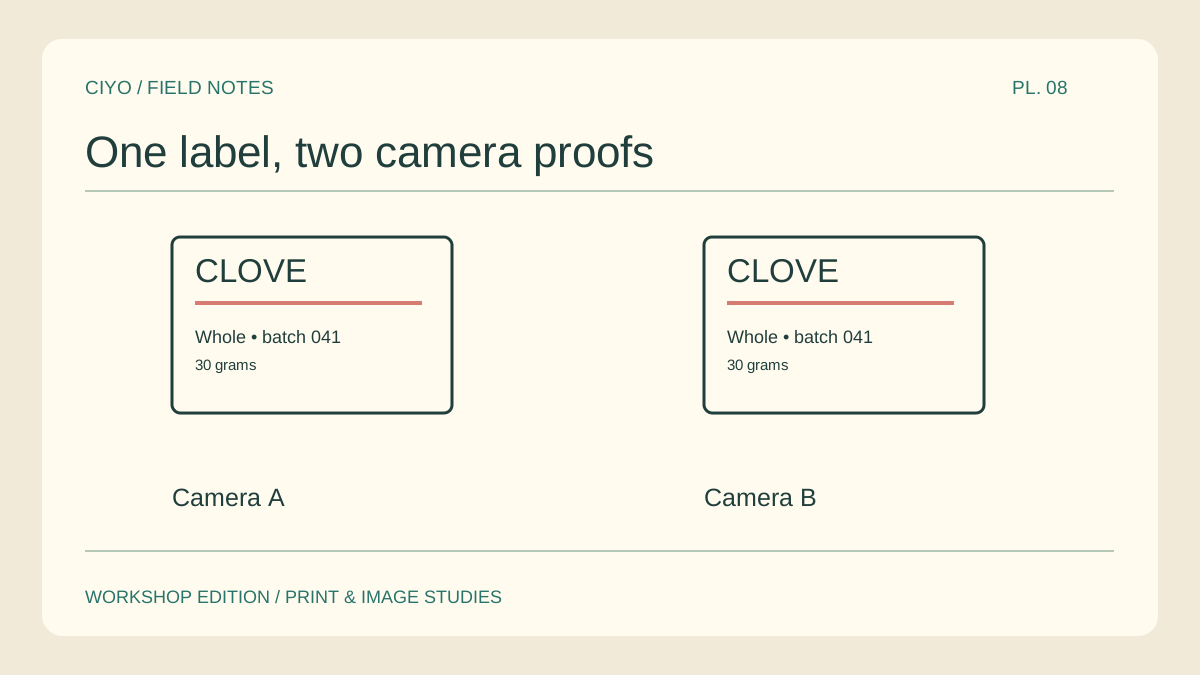
Choose the shop image you need before comparing cameras. For a seller of spice tins, the real test may be whether the smallest line of type survives the marketplace crop. Photograph one tin with both candidates under the same conditions.
Set a delivery target
Decide on an output width, orientation and crop for the comparison. Write down the exact line you need to read. Only compare files at that same exported size, even if one original has many more pixels.
Fix the label angle
Set the tin against two removable position marks. Face the label toward the lens and check for a broad reflection across the type. Move the light once before the test, then lock it for both cameras.
Match the framing
Use a support and put the tin at the same size in each frame. If one lens cannot focus that close, record the closest useful framing. That restriction may matter more on your table than the camera’s headline specification.
Take repeated photographs
Make three fresh focus attempts with each camera. Select the best and keep the other two. A candidate that produces only one sharp image out of three may cost time across a shelf of similar products.
Compare equal-size crops
Export the same square crop for the shop. Ask someone to read the chosen line without seeing which camera took it. Note lost letters, false coloured edges and any difference in the printed brand colour.
Decide on the whole setup
Repeat a frame on the actual support you would use for routine work. Record working distance, focus success and whether the support fitted your table. Keep the labelled proof sheet with those observations when comparing options.
Compare the two crops
Use the same thumbnail framing on both real photographs. Look for the first small line of type that stops being readable.