Holiday stationery
Make a gift wish list that keeps sizes and alternatives together
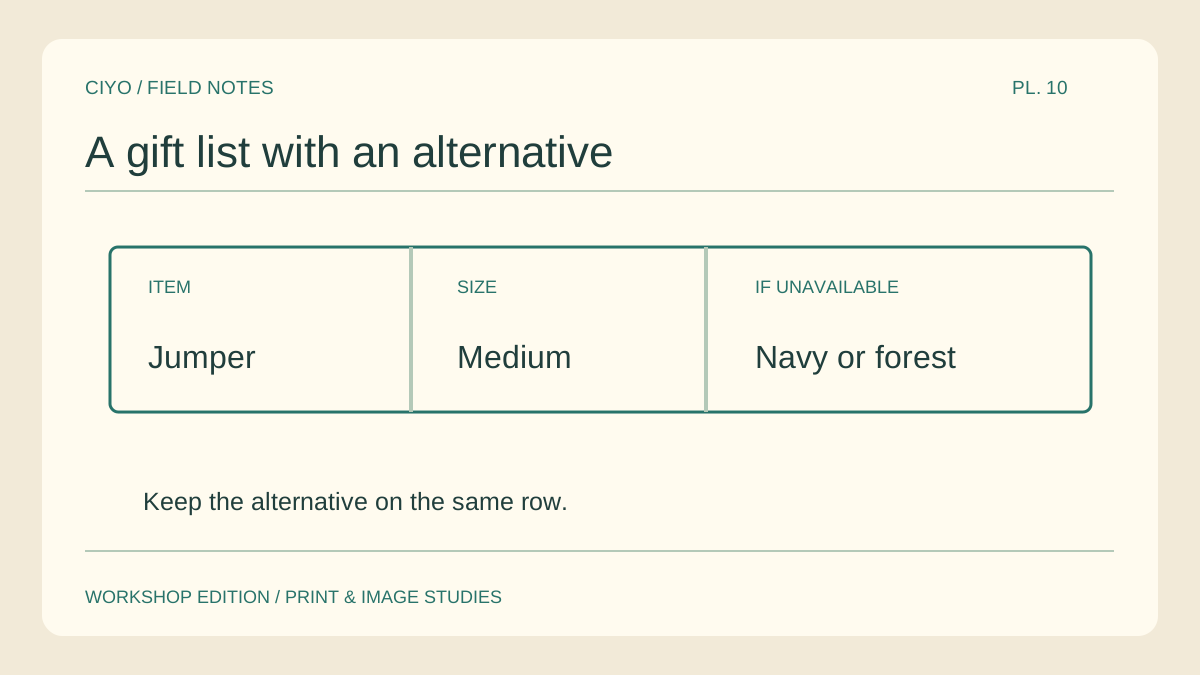
A list that says “blue jumper” still leaves the buyer guessing. One well-designed row keeps the item, size and acceptable substitute together. Build the row around a real example before copying it down the page.
Give the item a distinct name
Write the type of item and the detail that identifies it, such as a ribbed cotton jumper. A product link can be helpful, but keep a plain description in case the link stops working before the list is used.
Keep size next to colour
Use a single line for the two decisions a buyer must make together. For clothing, include the brand’s size label when relevant. A generic size may refer to different measurements in different shops.
Distinguish preference from requirement
Give the recipient a place to say which detail can vary. A child may care about the navy colour but accept a different pattern. That note is more useful than a long second list of nearly identical products.
Leave space for a substitute
Put one alternative directly beneath the first choice. Read the row aloud as a complete thought. If the alternative needs another size or colour, include that change in the same space.
Test the printed row
Use a normal pen to fill the longest example. If handwriting slips into the next row, enlarge the writing area or move secondary details to the back. Keep room for fingers or a clipboard at the lower edge.
Share one current version
Date the page and keep a master copy. If it is passed among family members, use a separate buyer copy to coordinate purchases. The recipient’s illustrated wish list can then stay readable and reusable.
Lay out the wish-list rows
Keep each item and its substitute in one group so they move together when editing the list.