GPT-6 Astra · Run time
How Long an AI Image Run Should Take, and When to Stop Waiting

“Astra is slow” is one of the most common things people search for, and it is usually a question about one thing: is this run stuck, or is it just working? Without a number to compare against, every wait feels too long.
This article gives you the number. We timed real runs in Ciyo on September 20, 2026, wrote down what each one cost, and turned the results into a rule you can apply the next time a progress bar sits still.
Time one run before you change anything
The first move is not a new prompt or a different model. It is a stopwatch. Start it when you press the Run button and stop it when the picture appears on the canvas. One timed run tells you more than an afternoon of guessing, because it gives you a baseline to compare every later run against.
Time the run you actually make, at the settings you actually use. A 1K draft and a 2K final are different jobs, and comparing them tells you nothing.
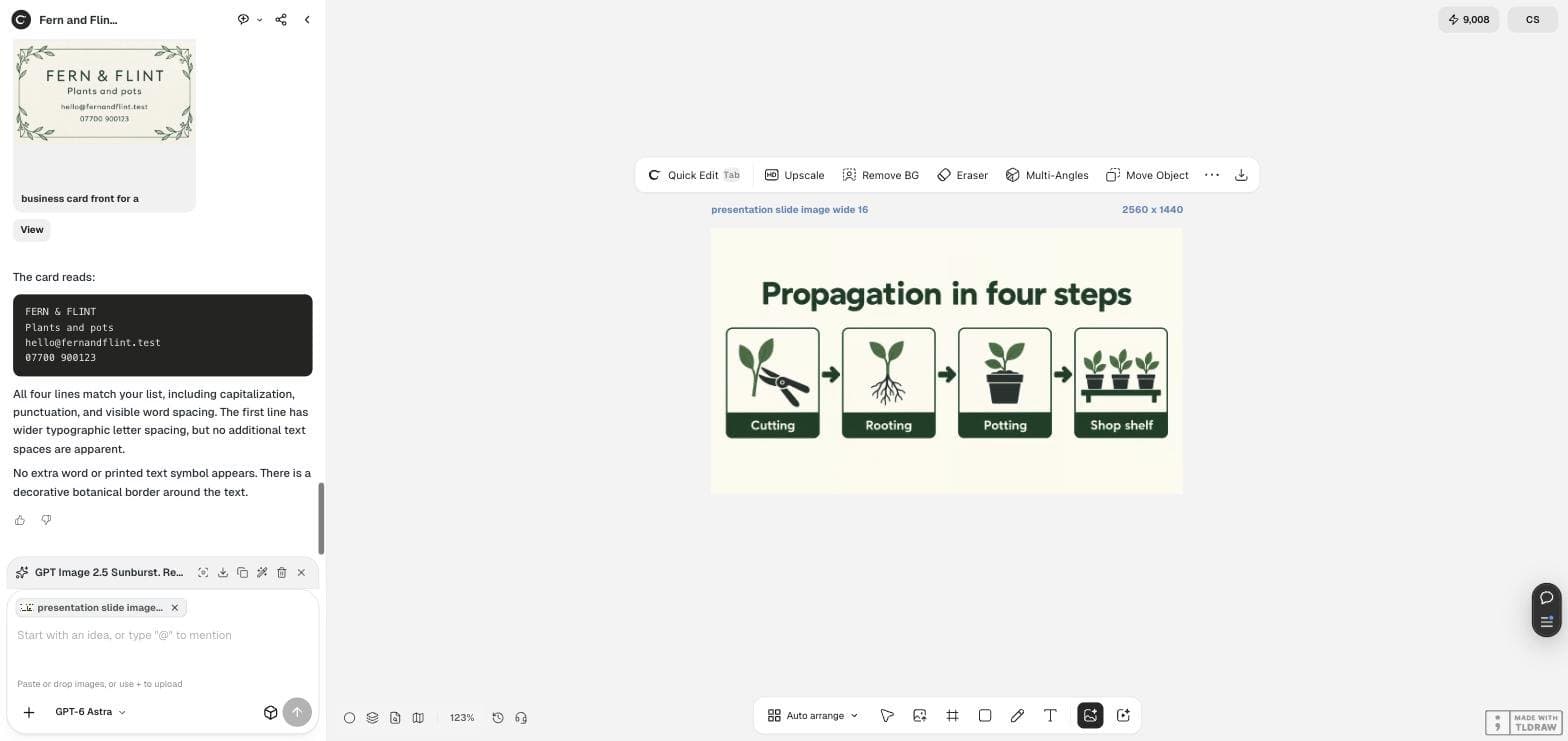
What we measured on September 20, 2026
We polled the canvas every ten seconds after pressing Run. The image was absent at thirty seconds and present at forty, so the run finished inside that window. Every other image at the same settings behaved the same way through the afternoon: none finished inside twenty seconds, and none took much more than a minute.
A text answer from GPT-6 Astra is a different shape of job. When we gave Astra four images and four scoring criteria, the panel showed “Working” for more than a minute before the table appeared, because it inspected the images in several passes first.
| Job | Settings | Observed wait | Credits charged |
|---|---|---|---|
| Diagram slide | GPT Image 2.5 Sunburst, 16:9, 2K, High | 30 to 40 seconds | 9 |
| Business card | GPT Image 2.5 Sunburst, 16:9, 2K, High | under a minute | 7 |
| Pixel sprite | GPT Image 2.5 Sunburst, 1:1, 1K, Medium | under a minute | 2 |
| Four post variants | GPT Image 2.5 Flare, 1:1, 1K, Medium, 4 images | about a minute | 8 |
| Astra scores four images | GPT-6 Astra, four attachments | over a minute | 0 |
Four things that genuinely make a run longer
Resolution is the biggest lever we saw. The same empty frame quoted four credits at 1K and seven at 2K, and the larger job takes longer as well as costing more. Quality has the same effect in a smaller way.
Asking for several images at once does not multiply your wait, because they run together, but it does multiply the price. A longer prompt adds a little of both: our 68-word slide prompt pushed the charge from the quoted seven credits to nine.
Attachments are the quiet one. Every reference image has to be read before anything is drawn, and Astra read our ten references in four separate passes.

The rule we now use
Wait one minute without touching anything. Most runs finish well inside that.
Between one and three minutes, leave it alone but stop adding work to the same thread. Starting a second run while the first is still going gives you two slow jobs instead of one.
After about three minutes with no result and no error, cancel and run it again at 1K first. A 1K draft proves the prompt works; only then pay for the 2K version.
Spend the wait on the next decision
A run that takes half a minute is not the bottleneck in your afternoon. The bottleneck is usually that the brief was not settled before you pressed Run, so the picture arrives and you still have to decide what you wanted.
Use the wait to write down the check you will apply when the image lands: the exact words that must appear, the space you need for a caption, the size the file has to be. Then the result is either right or wrong in ten seconds, instead of “hmm” for ten minutes.
Other people are timing it too
Waiting is not only a Ciyo question. On September 17, 2026 a reader in r/OpenAI described replies in a work thread going from one to three minutes to over twenty, and asked what had changed. Sixteen people answered.
That post is about a different product and a text thread, not about image generation in Ciyo. We include it because it shows the same instinct we started with: people reach for a comparison number, and when they do not have one they assume the worst.
A text post from 2026-09-17 about a different product. It supplies no measurement, only the question.
Questions about slow runs
Does cancelling a run refund the credits?
We did not test a cancellation in this session, so we cannot tell you from measurement. Check the balance before and after if you cancel one, and treat any credit already charged as spent.
Is a 2K image worth the extra wait?
Only when the file has to be big. A 1K draft is enough to check wording and layout. We run 2K once the draft is right, which is also when the price rises from four credits to seven on the same frame.
Why did my run cost more than the number on the button?
The button shows an estimate before your prompt is counted. Our diagram slide quoted seven credits with an empty prompt and cost nine once a 68-word prompt was typed.
Try the run in Ciyo
Open the canvas, run the step once, and time it yourself before you change anything.