Poster design
Crop a missing-pet poster photo so an identifying mark stays visible
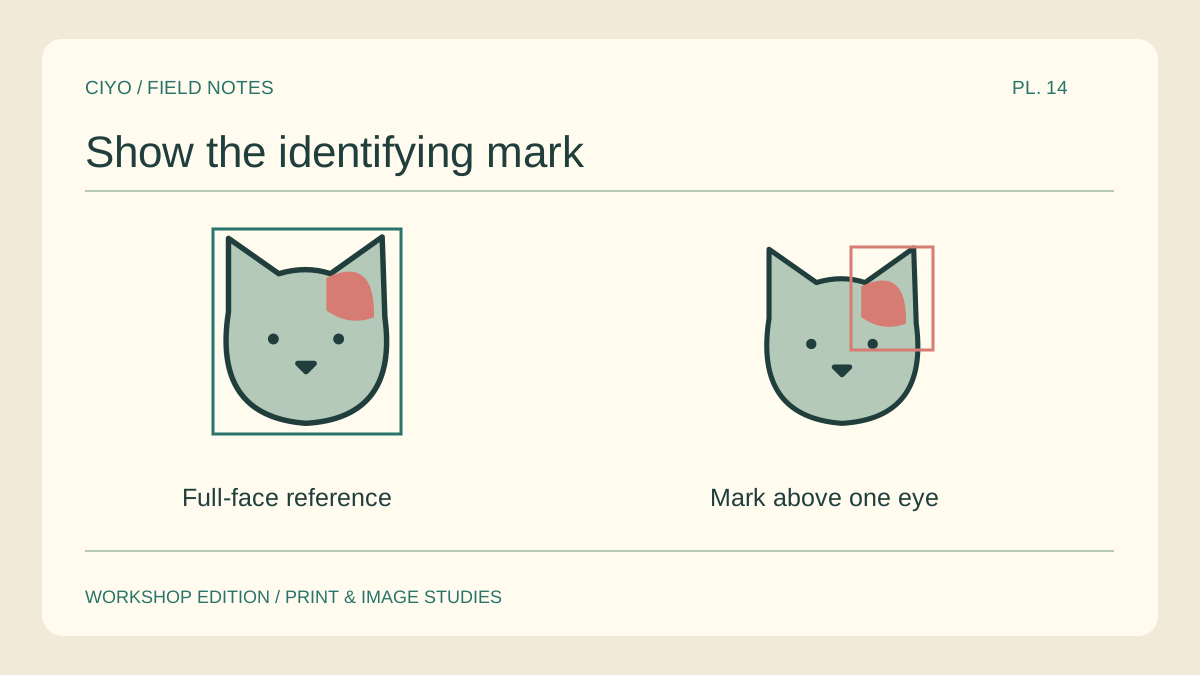
Someone looking for a missing cat needs an accurate identifying detail. Start with a recent, unaltered photograph that clearly shows a real marking. The poster example puts the face in the main panel and a second view of the marking just below it.
Choose the recognition detail
List two features that a stranger could see from the pavement, such as a pale left paw and a dark patch by the nose. Check the side carefully. A mirrored photograph can reverse the apparent location of a mark.
Crop the head with breathing room
Keep the ear tips and the contour of the chin inside the main photo. Look at the crop from a few steps away. If a patterned sofa distracts from the face, narrow the crop without losing the actual outline.
Add one factual inset
Use a second photograph for a feature hidden in the first, such as a tail marking. Label it in plain language. Keep its orientation consistent and avoid filters or generated details that alter coat colour or pattern.
Place the essential text nearby
Set the pet’s name, general last-seen area and a contact method at readable sizes. Confirm contact information with the owner and use the details they wish to publish. A decorative headline must leave space for those items.
Print a practical proof
Put a draft at the height where it will be read. Ask another person to point out the identifying feature and read the contact method. Correct the crop or type if either task requires leaning very close.
Update the distributed copy
Keep a dated editable master and note where physical copies were placed. That makes it easier to replace an outdated photograph or take down notices when the search ends. Preserve the unmodified source photos separately.
Lay out the notice
Use original photographs and leave room for a current contact method. Check the proof on paper before distributing it.