Sketch workflows
How to Turn a Sketch into a Design Brief in Ciyo

A small-business marketer often starts with a sketch and a request such as “we need a post for the weekend offer”. The drawing can show the bouquet and headline. It cannot tell a designer who should respond, what the business has approved, or which details are still missing.
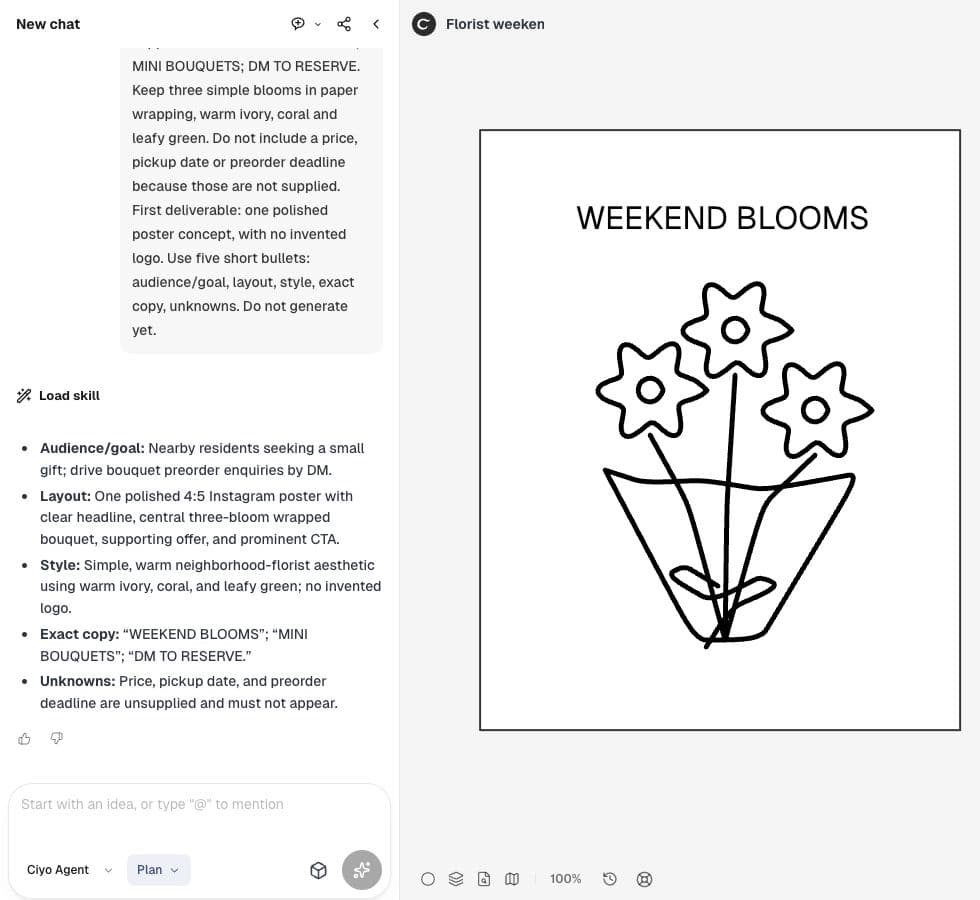
This walkthrough uses a fictional neighborhood florist’s mini-bouquet campaign. We developed the sketch in Ciyo, discussed it in Plan mode and asked for a concise brief before creating a poster concept. The screenshots show the actual demo, so you can see how the visual idea becomes a task someone can act on.
1. Start with the sketch and the job it must do
Draw or upload the rough layout, then bring it into view. Our example has three flowers in paper wrapping, a headline above and room below for an offer and call to action. Choose Plan from the conversation menu to discuss the direction.
State the business task in a sentence: “Help nearby residents discover our weekend mini-bouquets and enquire by direct message.” Specify the channel and first deliverable: one 4:5 Instagram poster concept. That is a much clearer starting point than asking for a whole campaign at once.
2. Separate visible observations from supplied facts
Ask the agent to describe the sketch before turning it into instructions. In our demo, Ciyo recognized the flowers but described the tapered wrapping as a vase. We clarified that it was paper around a bouquet. A small correction here can prevent the wrong subject appearing in the finished concept.
Next, supply the exact approved words. We chose “WEEKEND BLOOMS”, “MINI BOUQUETS” and “DM TO RESERVE” for this fictional campaign. Price, pickup date and preorder deadline were deliberately left unspecified. Type those facts into the conversation when they are ready; the drawing cannot establish them.
Write a concise creative brief for this fictional florist campaign. Audience: nearby residents looking for a small gift. Channel: one 4:5 Instagram feed post. Goal: bouquet preorder enquiries by DM. Exact supplied text: WEEKEND BLOOMS; MINI BOUQUETS; DM TO RESERVE. Keep three simple blooms in paper wrapping, warm ivory, coral and leafy green. Do not include a price, pickup date or preorder deadline because those are not supplied. First deliverable: one polished poster concept, with no invented logo. Use five short bullets: audience/goal, layout, style, exact copy, unknowns. Do not generate yet.3. Put the brief into a small set of fields
Ciyo returned five bullets covering audience and goal, layout, style, exact copy and unknowns. That is enough to review the next asset without burying the decision in a long document. The screenshot shows the actual response beside the sketch.
Use the table to check the brief before handing it off. A composition study can proceed without a price. A price-led offer cannot. Decide which missing facts affect the current deliverable and which must be resolved before publication.
| Field | Agreed direction | Source or next check |
|---|---|---|
| Audience and goal | Nearby residents seeking a small gift; DM enquiries | Supplied in the campaign request |
| Channel | One 4:5 Instagram feed post | Chosen format for this demo |
| Composition | Headline above; three-bloom wrapped bouquet in the centre; CTA below | Sketch and conversation |
| Style | Warm ivory, coral and leafy green; simple floral illustration | Creative choice for this example |
| Exact copy | WEEKEND BLOOMS / MINI BOUQUETS / DM TO RESERVE | Supplied words to check in the final asset |
| Unknowns | Price, pickup date and preorder deadline | Keep out until the business confirms them |
| First deliverable | One polished poster concept | Review text and layout before use |
4. Define the boundaries of the first deliverable
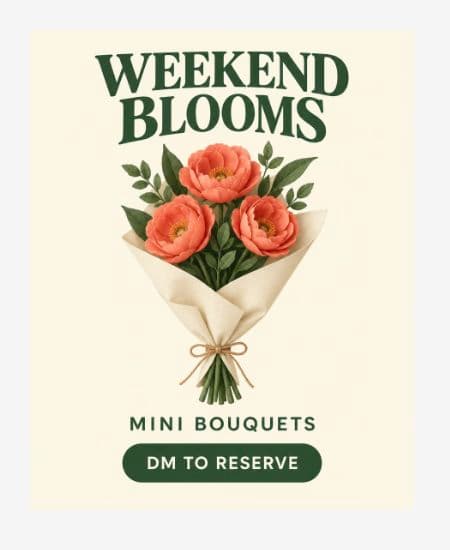
Define what the next person or tool should make. Here it is one poster concept with a recognizable wrapped bouquet and the supplied text. It does not include a posting schedule, paid campaign setup or handling customer enquiries. Those are separate decisions for the business.
Name what can change from the sketch. The rough petal shapes and paper folds can become more polished; the three-bloom idea, headline hierarchy and enquiry action should remain clear. If the shop needs customers to see the exact bouquet for sale, supply an accurate product photo and use it appropriately in the final campaign.
Turn our agreed florist-post brief into a handoff with: audience and goal, format, must-keep elements, permitted changes, exact supplied copy, unresolved facts and review criteria. Keep the first deliverable to one poster concept. Use “not supplied” for missing business details. End with the decisions that need my confirmation before publication.5. Review the plan before creating
Read the brief as if a teammate were about to act on it. Check the supplied words and remove any unapproved offer details. In our earlier critique, the agent suggested a Friday preorder deadline as sample CTA wording. Because we had not supplied that deadline, the brief explicitly excluded it.
When the brief is ready, switch to Create and ask for the agreed concept. If Ciyo presents a Create from this plan action, that also provides the handoff into creation. For a brief-only task, keep the five bullets and stop there. The benefit is a shared next step that you can review before expanding the work.
Why a rough sketch needs an explanation
In a Reddit discussion, u/rocinantethehorse asks about presenting first-round sketches and ideas to clients. Replies disagree about how polished those presentations should be. The discussion does not establish one universal rule, but it exposes a recurring communication problem: people can judge the same sketch against different expectations.
A brief gives the recipient the intended context. The florist example records the enquiry goal, the supplied wording, the visual direction and the limits of the next deliverable. This template is our own adaptation for Ciyo; the discussion is not evidence of a customer result.
October 4, 2023: a discussion about presenting early concepts, with differing views on the right level of polish. The brief template here is our own adaptation; no Ciyo use or endorsement is implied.
6. Keep the decisions with the version you chose
Copy the agreed brief into the document or workspace you use for handoff and identify the sketch version it describes. If you change the offer or replace “DM TO RESERVE” with a booking link, update the brief as well as the image.
For the florist concept, check three things before using it: the bouquet reads clearly, all three supplied text lines are correct, and the post directs viewers to an enquiry channel the business can actually handle. A polished visual is useful when the message and the next action are just as clear.
Frequently asked questions
Can a sketch replace a written design brief?
A sketch is useful for shape, arrangement and emphasis. Add words for purpose, audience, exact copy, deliverables and constraints that are not visible. Together they make the direction easier to review.
What is Plan mode for?
Plan mode lets you discuss and refine the direction before creating. Use it to review the brief, then switch to Create when you want the agreed asset. If a plan handoff is shown, choose Create from this plan.
Will the agent know what my rough marks mean?
It can interpret the visible drawing, but ambiguous marks need clarification. Ask it to separate observations from assumptions and confirm the important details yourself.
Does creating from a plan produce a finished print-ready poster?
The deliverable depends on what you request and the available tools. An image concept still needs final copy, layout and export checks for its destination. Define those later steps explicitly instead of assuming they are included.
Give your next campaign a clear brief
Bring your sketch, offer and audience into Ciyo. Use Plan to agree on one useful asset, the exact message and what still needs a decision.