Clothing launch planning
Match window light when a clothing shoot spans two days
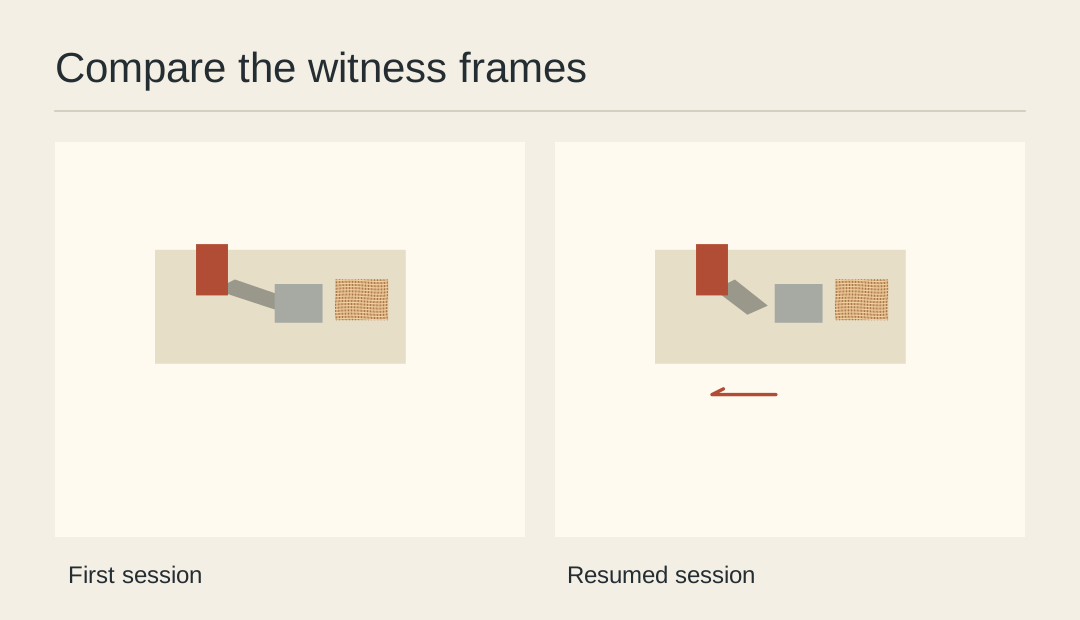
A replacement dress arrives a day late. The table and camera still fit in the same room, but the window has changed. A simple reference frame from day one gives you three things to match before the second garment goes on set.
Build a witness frame
Place a neutral card, a piece of the actual cloth and a small upright spool on the table. Mark their positions. The card shows a cast, the cloth reveals texture and the spool leaves a shadow with a direction.
Record the room
Photograph the window, any curtain and the table from the doorway. Write down the time and where the camera stood. This picture often explains a difference that is invisible in two close product crops.
Rebuild before adding clothing
Put the three reference objects back on their marks on day two. Use the same camera settings for a first comparison. Check the spool’s shadow direction before adjusting brightness.
Read the shadow edge
An abrupt edge on day two and a broad soft edge on day one suggest a change in the apparent light source. Try the original curtain position or wait for similar light before altering colour.
Check fabric against fabric
Display the two reference crops side by side with identical processing. If the neutral card matches but the cloth still shines differently, inspect the cloth angle and the window reflection.
Identify the resumed files
Save the day-two reference as the first frame of the new run. Put the approved day-one frame next to it in the handoff. The person assembling the colourway board can see where the shoot resumed.
Keep a record of both sessions
Place the two witness frames together with a note naming each setup.