Shop-window design
Add a fabric detail inset to a clothing poster
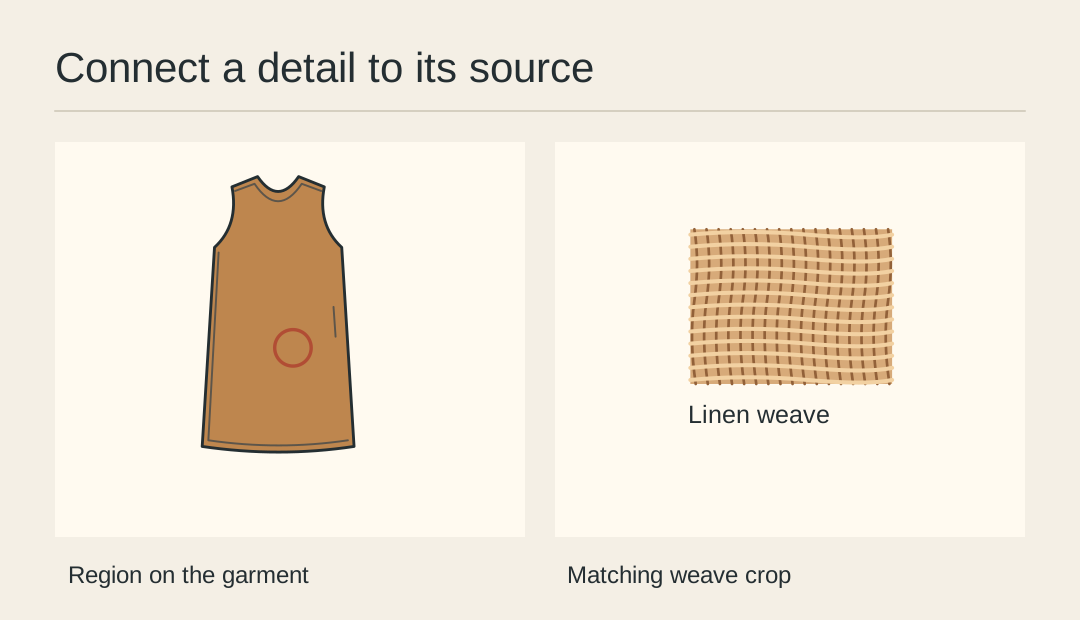
A shopper can see a shift dress from the door but cannot see its weave. One true detail crop can supply that missing information. Build the inset from the matching photographed sample and give it a clear relationship to the hero.
Identify the question
Finish the sentence “This close-up shows …” with one property, such as the natural slubs in the linen. If the answer merely repeats the garment colour, the inset may add clutter.
Choose a matching source
Use the close-up from the same sample and colourway shown in the main photograph. Keep the original filename in the working document. A related fabric swatch may have a different weave density.
Pick a clean crop
Crop tightly enough to make the weave readable, then inspect the crop at poster size. Avoid a fold that looks like a damaged seam when enlarged. Retain a nearby source view for verification.
Place it by the garment
Put the inset near an empty side of the main frame. When its origin matters, draw one short leader to the relevant area and stop before covering the garment’s contour.
Name the detail
Set a short caption such as “Linen weave, enlarged detail.” Keep magnification wording qualitative unless you can substantiate a precise scale for the finished print.
Read from the aisle
View the proof from the shop entrance. The dress should attract the first look and the detail should reward a closer one. Reduce the inset or move its caption if either competes with the headline.
Place the detail in the poster
Keep the detailed crop and hero image on separate layers while testing the caption.